
Scooter Permittees Receive Feedback from Students with Disabilities

Scooter Permittees Receive Feedback from Students with Disabilities
By Maddy Ruvolo

On a recent Monday in Golden Gate Park, 28 students and staff from AccessSFUSD gathered on JFK Drive to test-ride adaptive scooters. The group took turns riding adaptive devices from two scooter companies permitted to operate in the city, Lime and Spin. Adaptive devices are designed to meet the needs of riders with a variety of disabilities and provide additional stability features, such as a seat, a wider base, and an additional wheel. After trying the scooters, the students shared their feedback about a variety of design elements, including the wheels, seat, throttle, basket location, foot plate width, and the ease of getting started. 
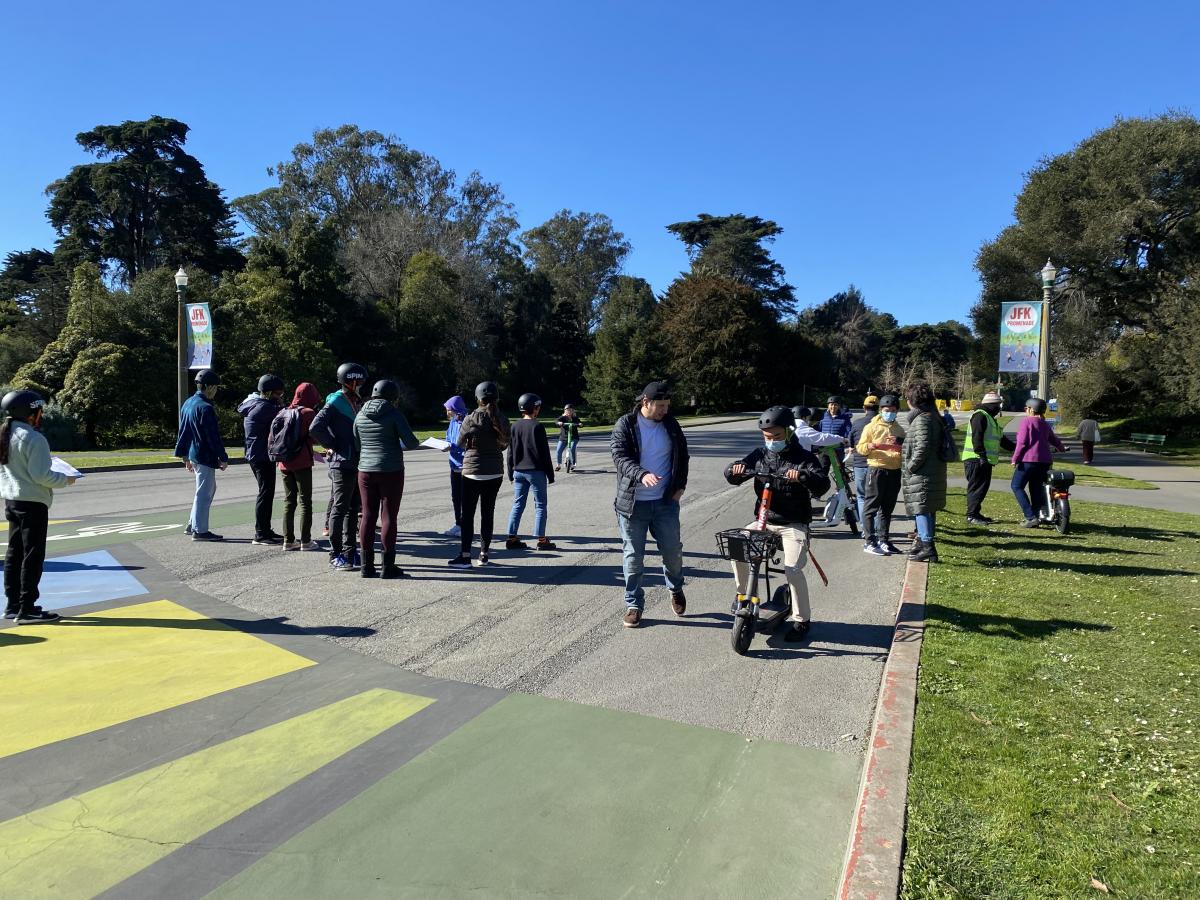
A group of AccessSFUSD students and staff rides adaptive scooters on JFK Drive in Golden Gate Park Adaptive scooter demo in Golden Gate Park

Students embraced the opportunity to ride scooters and provide feedback. AccessSFUSD is a community-based program for students 18-22 with disabilities. Located across 11 sites in San Francisco, the program focuses on teaching functional life skills within the community setting. Developing advocacy skills is a key component of the program, and students enthusiastically shared their input with the scooter companies. Heidi Seretan, Special Education Department Head at AccessSFUSD: The Arc said, “It was a glorious day to ride and advocate on car-free JFK in Golden Gate Park, San Francisco’s own backyard.”  

One student shared they had an “amazing first time” riding a scooter and described it as “the best.” Students also gave thoughtful constructive criticism, explaining when a particular seat height or device design didn’t work for them. And one student said that they “need more practice... but I'm getting the hang of it.”   
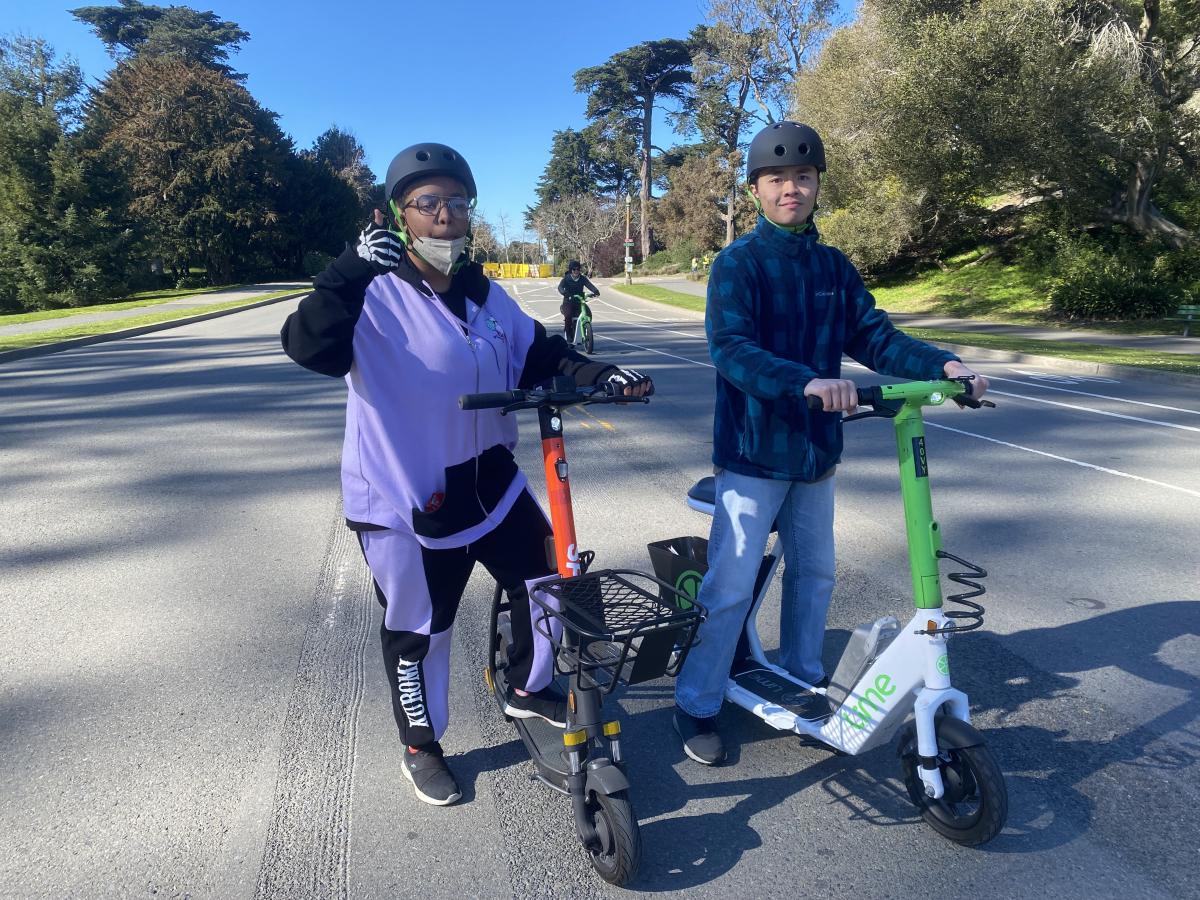
AccessSFUSD students standing with Lime and Spin scooters; one student is giving a thumbs upThumbs up to adaptive devices

Staff from Spin and Lime were on-hand to help students get rolling and to answer any questions. Both scooter permittees expressed their appreciation for the comments from AccessSFUSD students. Lime shared that they “enjoyed hearing directly” from the students and that their “hardware team has already begun reviewing students’ feedback to find ways to continue to refine our vehicles.” Spin echoed the importance of the students’ input, noting that “the direct feedback we gather from local San Francisco students and residents on our adaptive program is critical to continuously improving and more equitably serving the entire community.” 
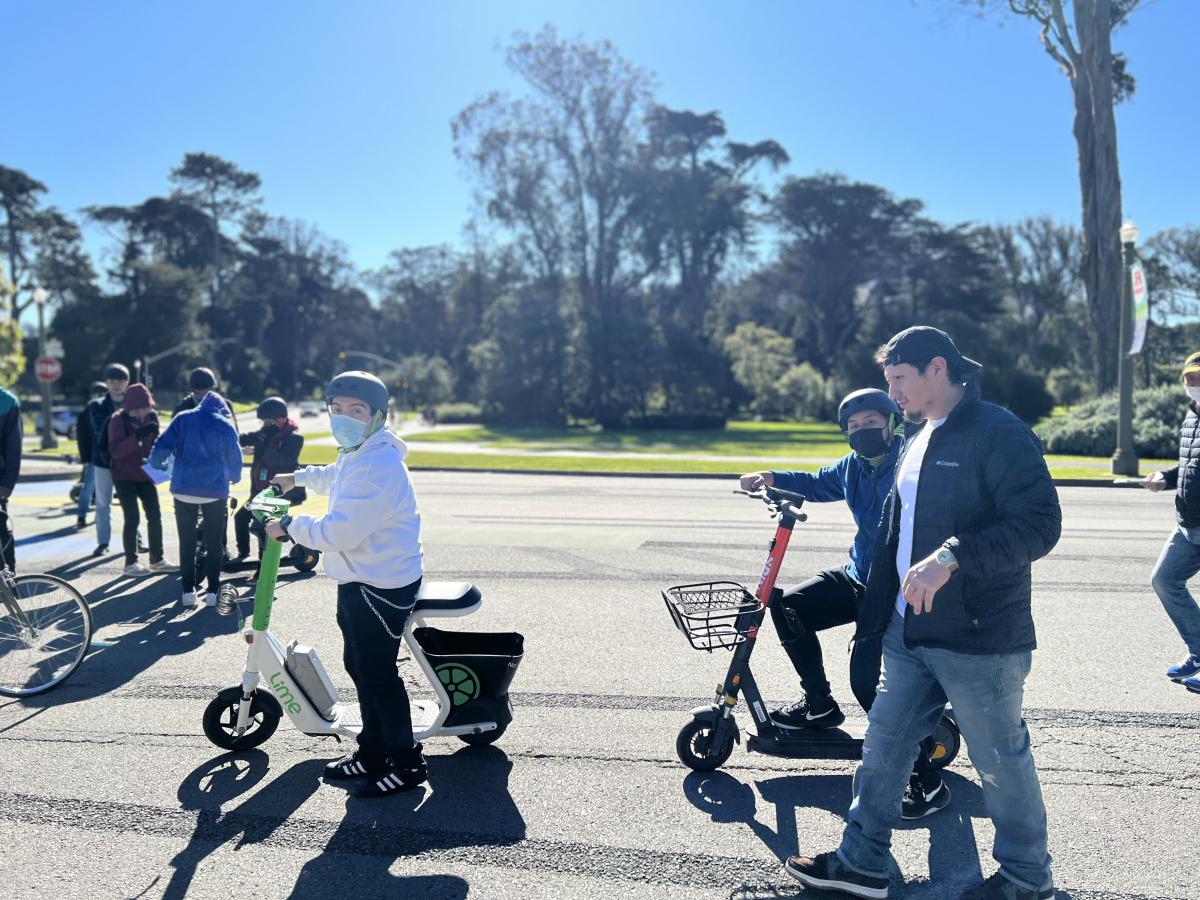
AccessSFUSD students on Lime and Spin scooters in Golden Gate ParkAccessSFUSD students enjoying scooters 

This is the second time the SFMTA has partnered with AccessSFUSD and scooter permittees to host an adaptive scooter demonstration, with the first event held in fall 2021. Any organization interested in partnering on a similar adaptive scooter event should get in touch with Maddy Ruvolo with our Accessible Services team by emailing Maddy.Ruvolo@sfmta.com.  
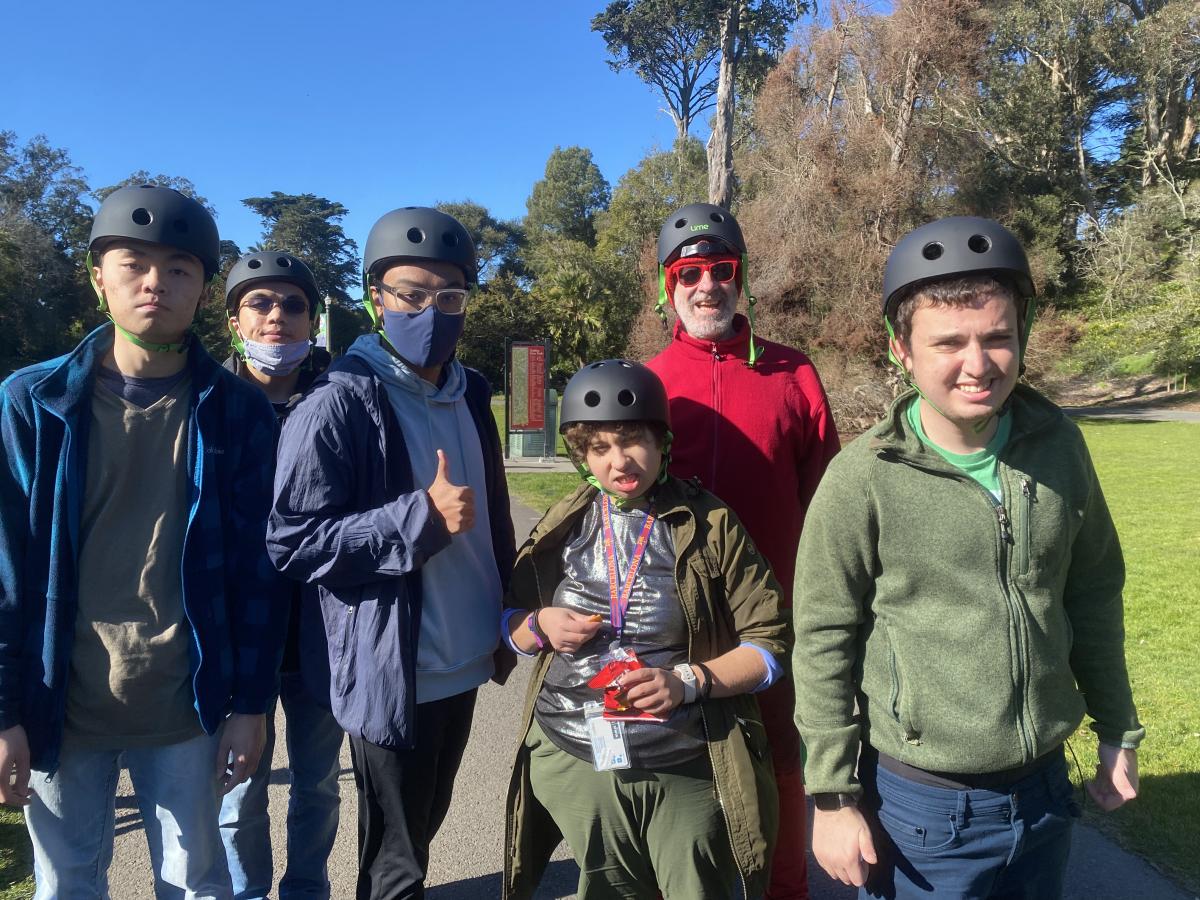
A group of AccessSFUSD students wearing helmetsStudents ready to ride

The SFMTA has prioritized adaptive scooters as part of our Powered Scooter Share Permit Program. The three scooter permittees — Bird, Spin and Lime — are required to provide adaptive scooters as a minimum of 5% of their on-street fleet. The permittees also offer different types of adaptive devices through their Complementary Adaptive Programs, which provide longer-term adaptive rentals free of charge through scheduled drop-off and pick-up. We encourage all who are interested to try an adaptive scooter, and stay tuned for more scooter demonstration events coming later this year! 


Published February 15, 2023 at 10:54PM
https://ift.tt/HIJC1oe

Comments

Popular posts from this blog

Slow Streets Program to Help With Social Distancing

Slow Streets Program to Help With Social Distancing By With Muni service temporarily reduced during the COVID-19 health crisis, many San Francisco residents need to walk and take other modes of transportation to make essential trips. However, sometimes it is difficult to maintain 6’ of social distance on many sidewalks, park paths, and bikeways. This can be especially true when passing lines outside grocery stores and other essential services. Because of this, many pedestrians are choosing to walk in the street, exposing themselves to swiftly moving vehicle traffic. The SFMTA is implementing a new program, Slow Streets, to close some streets to through traffic and allow roadways to be used more as a shared space for foot and bicycle traffic. Throughout the city, corridors have been identified for Phase 1 Slow Streets. Beginning this week, some of these streets will be closed to through vehicle traffic to prioritize walking/biking and to provide more space for social distancing duri...

By The Numbers: The SFMTA’s COVID-19 Response

By The Numbers: The SFMTA’s COVID-19 Response By Erica Kato The COVID-19 pandemic has brought about unforeseen c hanges to San Francisco’s transportation network. And the impact of the crisis will continue to be felt city-wide long beyond the end of the public health emergency. On March 13, 2020, when it became clear that San Francisco needed immediate adjustments to the transportation system, Director of Transportation Jeff Tumlin launched SFMTA’s Department Operations Center (DOC) team. Since then, the DOC has served as a centralized hub to ensure that we are minimizing health risks to employees and the public as we keep transportation running, both by coordinating internally within the agency and by collaborating closely with our city, state, and federal partners to deploy resources and information in the most effective way possible. San Francisco's response to the COVID-19 pandemic included implementing temporary emergency transit lanes  Our COVID-19 response has chal...

Weight Loss Success Stories: 6 People Share How They Shed Pounds with a High-Protein Diet

Weight Loss Success Stories: 6 People Share How They Shed Pounds with a High-Protein Diet Sarah:  Sarah, a 32-year-old mother of two, struggled with her weight after having her second child. She decided to try a high-protein diet and was able to lose 30 pounds in just three months. She replaced her breakfast with a protein shake, ate a salad with grilled chicken for lunch, and had fish or chicken with vegetables for dinner. Mike:  Mike, a 45-year-old man, had been overweight his entire life. He tried various diets, but none of them worked for him. He decided to give a high-protein diet a try and was able to lose 50 pounds in six months. He ate eggs, chicken, fish, and lean meats for most of his meals and limited his intake of carbohydrates and sugary foods. Emily:  Emily, a 28-year-old woman, had been struggling with her weight since her teenage years. She tried many diets and weight loss programs, but nothing seemed to work for her. She decided to try a high-p...