How Improving Muni Also Makes Life Better for Drivers

How Improving Muni Also Makes Life Better for Drivers
By Andrea Buffa

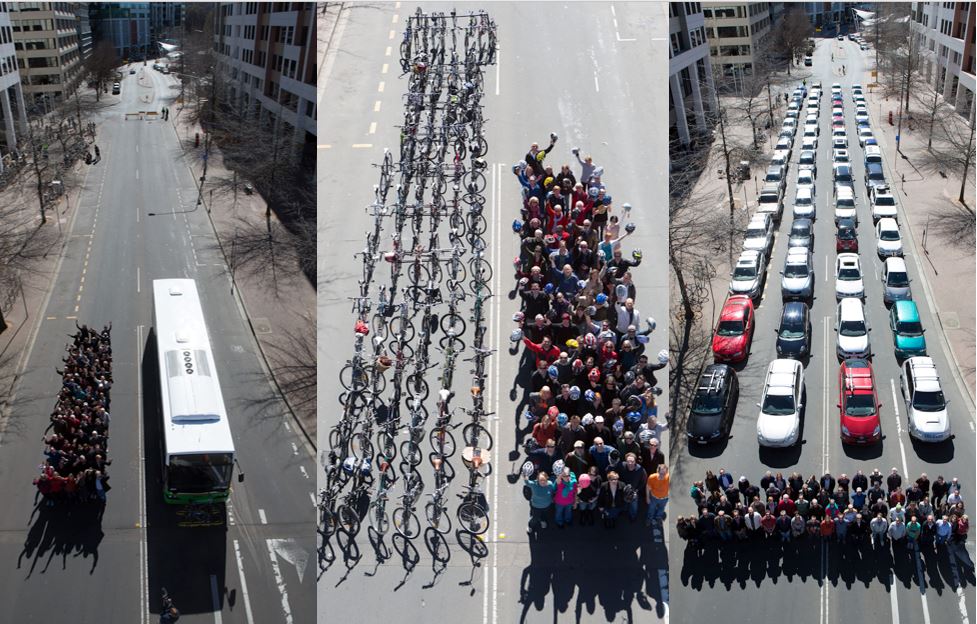
Side-by-side photos of people on a bus, on bikes and in cars; showing a lot more space on road when people use bikes or buses.

Photo credit: We Ride Australia

If you mostly drive to get around San Francisco, you may be wondering, “what has the SFMTA done for me lately?” San Francisco is a “transit first” city, so at the SFMTA we focus our resources on making it easier for San Franciscans to get around by public transit as well as by biking, walking and personal mobility device. While it may seem like adding transit lanes and protected bike lanes doesn’t have anything to do with driving, in fact, it does. 

Since San Francisco doesn’t have room to give more space to roads, we have to change the way we use the limited space on our existing streets. (Not that adding more roads reduces traffic anyway – check out this article.) City Traffic Engineer Ricardo Oleo puts it this way: “When you have a city like San Francisco that was built with density in mind, having everyone drive is not a viable option. There’s not enough room to have that happen. It’s not geometrically possible. You’d have debilitating amounts of congestion without Muni.” 

A well-designed city gives people choices. The many San Franciscans who already do choose to take Muni, walk or bike to get around are taking some pressure off the city's roadways. Imagine if everyone on the 49 Van Ness/Mission that’s zipping down the new Van Ness Bus Rapid Transit corridor were instead driving on Franklin and Gough. That would translate into another 21,000 cars in traffic on a typical day! And think about what congestion would look like on Fell Street if the hundreds of people who use the protected bike lanes there were behind the wheel of a car? 

Every person who takes Muni to get to the Chase Center, their workplace or their doctor’s appointment is one fewer car on the road. So, everything we do to make Muni more appealing—whether it’s transit lanes, new buses or smart traffic signals that give transit priority —is also good for drivers.  

Every person who walks, bikes or hops on an electric scooter to get to Golden Gate Park or pick up something at the local pharmacy is one fewer car that needs a parking space. So, everything we do to make it safer and more appealing to use active forms of transportation is also beneficial for the people who do need to drive to those destinations. 

Bikes take up far less space on the road than cars, and Muni buses and trains can transport a significant number of people in a compact space. 100 people traveling in personal vehicles take up 4,500 square feet. The same 100 people on bikes takes up about 1,200 square feet. And if they were all in a bus? They would take up only 520 square feet. They would also be responsible for far fewer greenhouse gas emissions. 

Reducing greenhouse gas emissions is a priority for the SFMTA and the city of San Francisco. But we realize most people make travel decisions based on their personal lives – not on San Francisco’s climate action plan. As a transportation agency, our job is to make transit, walking and rolling the best travel options for more people. If we’re able to do that, we’ll help fight the climate crisis and simultaneously improve the driving experience for people who still need to drive.  


Published August 12, 2022 at 11:16PM
https://ift.tt/MkRKvZB

Comments

Popular posts from this blog

Slow Streets Program to Help With Social Distancing

Slow Streets Program to Help With Social Distancing By With Muni service temporarily reduced during the COVID-19 health crisis, many San Francisco residents need to walk and take other modes of transportation to make essential trips. However, sometimes it is difficult to maintain 6’ of social distance on many sidewalks, park paths, and bikeways. This can be especially true when passing lines outside grocery stores and other essential services. Because of this, many pedestrians are choosing to walk in the street, exposing themselves to swiftly moving vehicle traffic. The SFMTA is implementing a new program, Slow Streets, to close some streets to through traffic and allow roadways to be used more as a shared space for foot and bicycle traffic. Throughout the city, corridors have been identified for Phase 1 Slow Streets. Beginning this week, some of these streets will be closed to through vehicle traffic to prioritize walking/biking and to provide more space for social distancing duri...

By The Numbers: The SFMTA’s COVID-19 Response

By The Numbers: The SFMTA’s COVID-19 Response By Erica Kato The COVID-19 pandemic has brought about unforeseen c hanges to San Francisco’s transportation network. And the impact of the crisis will continue to be felt city-wide long beyond the end of the public health emergency. On March 13, 2020, when it became clear that San Francisco needed immediate adjustments to the transportation system, Director of Transportation Jeff Tumlin launched SFMTA’s Department Operations Center (DOC) team. Since then, the DOC has served as a centralized hub to ensure that we are minimizing health risks to employees and the public as we keep transportation running, both by coordinating internally within the agency and by collaborating closely with our city, state, and federal partners to deploy resources and information in the most effective way possible. San Francisco's response to the COVID-19 pandemic included implementing temporary emergency transit lanes  Our COVID-19 response has chal...

Weight Loss Success Stories: 6 People Share How They Shed Pounds with a High-Protein Diet

Weight Loss Success Stories: 6 People Share How They Shed Pounds with a High-Protein Diet Sarah:  Sarah, a 32-year-old mother of two, struggled with her weight after having her second child. She decided to try a high-protein diet and was able to lose 30 pounds in just three months. She replaced her breakfast with a protein shake, ate a salad with grilled chicken for lunch, and had fish or chicken with vegetables for dinner. Mike:  Mike, a 45-year-old man, had been overweight his entire life. He tried various diets, but none of them worked for him. He decided to give a high-protein diet a try and was able to lose 50 pounds in six months. He ate eggs, chicken, fish, and lean meats for most of his meals and limited his intake of carbohydrates and sugary foods. Emily:  Emily, a 28-year-old woman, had been struggling with her weight since her teenage years. She tried many diets and weight loss programs, but nothing seemed to work for her. She decided to try a high-p...