Help Make Muni Safe for Everyone

Help Make Muni Safe for Everyone
By Mariana Maguire

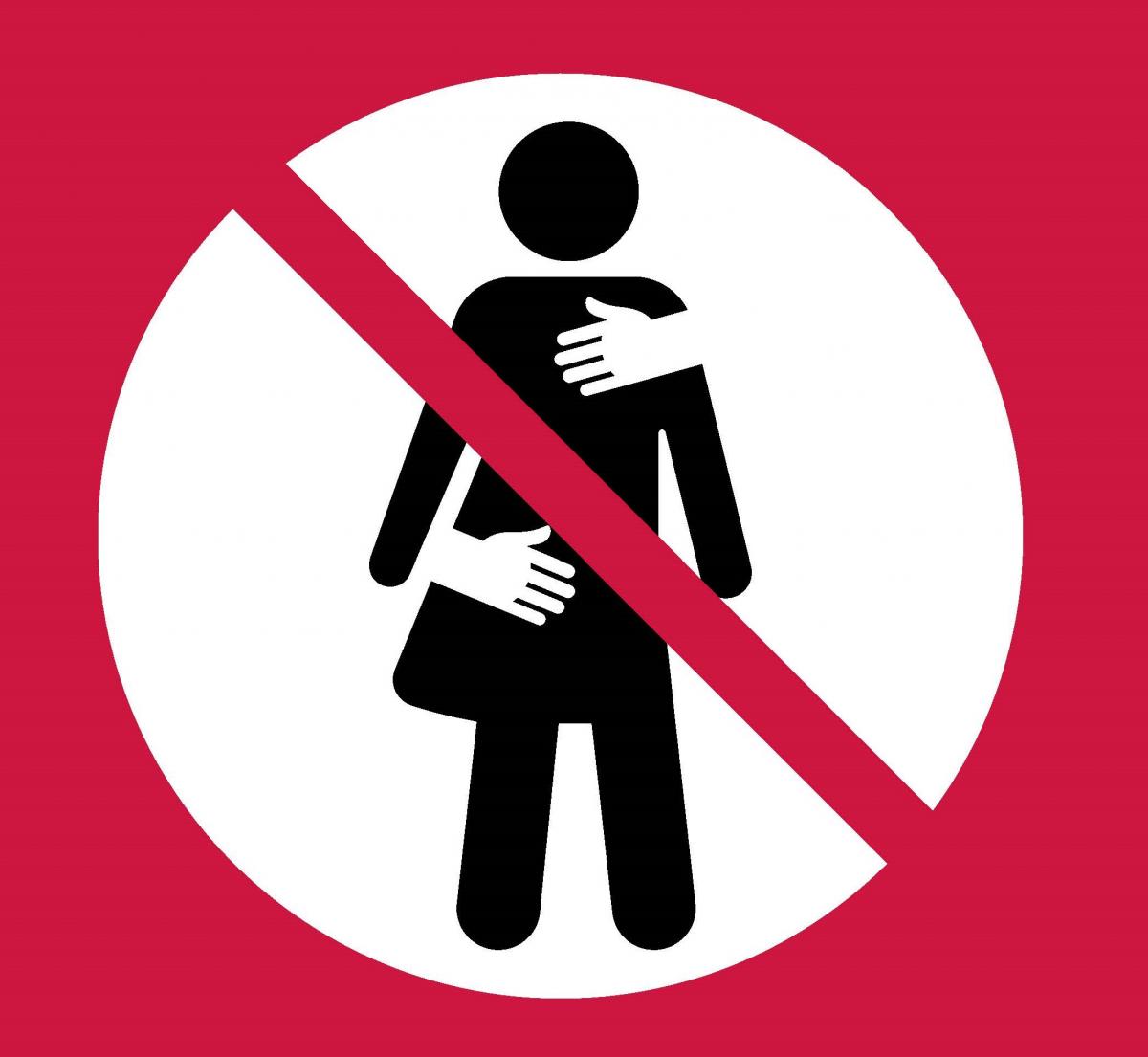
Person figure with hands on its body in the center of a white circle with a red background and red slash-through symbolizing no harassmentNew Muni “no harassment” symbol

The safety of our customers and staff is a top priority for the SFMTA. That is why we are launching MuniSafe – a campaign to increase reporting of gender-based harassment through recently expanded incident reporting options.

If you experience or witness an incident, help us make MuniSafe by reporting it using the Muni Feedback form at SFMTA.com/MuniFeedback, the 311 mobile app or by calling 311.

Non-English speakers should call 311 for language-assisted reporting.

Gender-based harassment takes many forms, affects many people and is absolutely not tolerated on Muni. Survivors should report incidents to the San Francisco Police Department if they feel comfortable doing so. By also reporting incidents directly to the SFMTA, you will help us track events that occur in our system so we can build better safety responses and direct resources to reduce gender-based harassment.
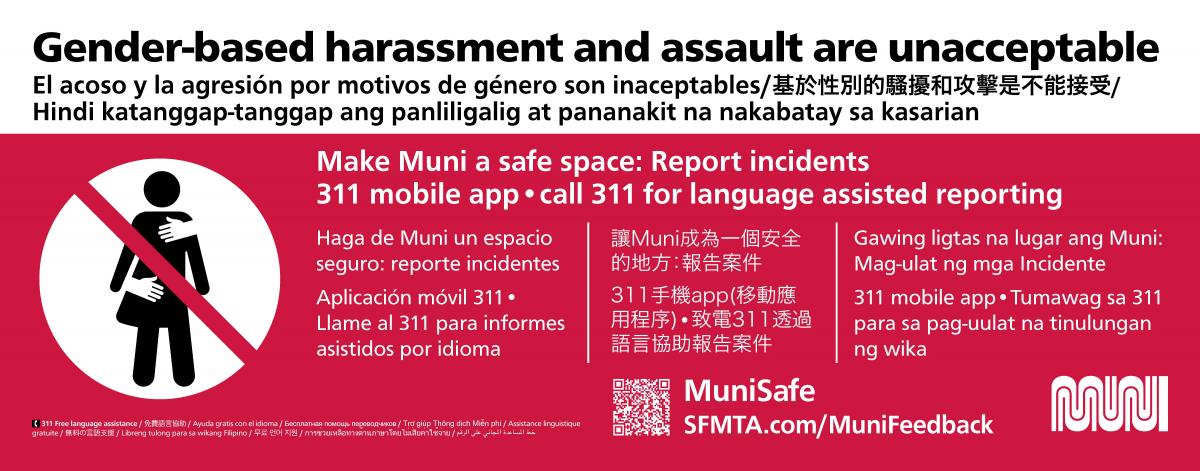
: Person figure with hands on its body in the center of a white circle with a red background and red slash-through symbolizing no harassment on the left quarter of an elongated red rectangle with text in three languages in the right three quarters and black text across the top with white background.New car cards that will be installed soon in vehicles system-wide with information about gender-based harassment reporting.

Use the Muni Feedback Form at SFMTA.com/MuniFeedback
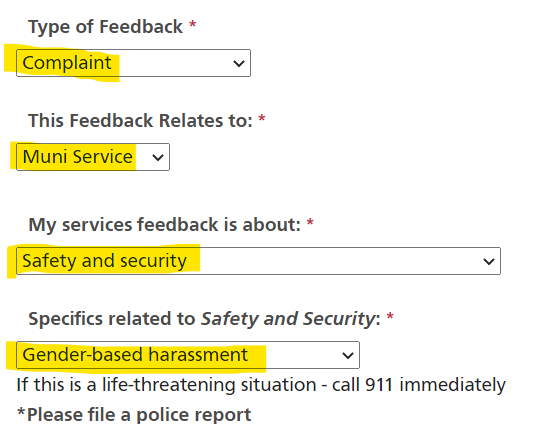
Screenshot of the Muni Feedback Form where "Complaint," "Muni Service," "Safety and Security," and "Gender based harassment" are selected

People should use the Muni Feedback form to report incidents at SFMTA.com/MuniFeedback. Under “Type of Feedback,” select “Complaint,” related to “Muni Service” to access the “Safety and security” topic and the specific topic of “Gender-based harassment.” You have the option to remain anonymous, or to request a follow up.

Your reports made on the form or by contacting 311 go directly to the SFMTA’s Security and Investigations Division. Information is confidential, but descriptions of incidents and behaviors may be shared with the San Francisco Police Department as necessary to support investigation and improve Muni safety.

Our staff will use the information provided in the report to internally investigate the incident, support the survivor and cooperate with law enforcement as needed. Staff will also analyze data from reports to identify and track trends and develop better safety approaches.

Personal Safety and Bystander Tips

  • Always stay alert and aware of your surroundings.
  • When traveling late at night or alone, sit close to the operator.
  • If someone is making you feel uncomfortable, move to a different part of the vehicle.
  • Ask for bystander assistance or call the operator for assistance when necessary.
  • If you see someone in a vulnerable situation or witness a possible incident, ask the individual if they are ok or need assistance. Offer to stay nearby.

The MuniSafe campaign is a multi-functional effort led by SFMTA’s Security Division to improve safety systems, processes and outcomes. SFMTA’s Safety Equity Initiative, announced in April 2022, is an integral part of the MuniSafe campaign. Learn more at SFMTA.com/SafetyEquity. If you have questions about this initiative, please email MuniSafe@SFMTA.com.


Published August 30, 2022 at 11:36PM
https://ift.tt/uN8rpsS

Comments

Popular posts from this blog

Weight Loss Success Stories: 6 People Share How They Shed Pounds with a High-Protein Diet

Weight Loss Success Stories: 6 People Share How They Shed Pounds with a High-Protein Diet Sarah:  Sarah, a 32-year-old mother of two, struggled with her weight after having her second child. She decided to try a high-protein diet and was able to lose 30 pounds in just three months. She replaced her breakfast with a protein shake, ate a salad with grilled chicken for lunch, and had fish or chicken with vegetables for dinner. Mike:  Mike, a 45-year-old man, had been overweight his entire life. He tried various diets, but none of them worked for him. He decided to give a high-protein diet a try and was able to lose 50 pounds in six months. He ate eggs, chicken, fish, and lean meats for most of his meals and limited his intake of carbohydrates and sugary foods. Emily:  Emily, a 28-year-old woman, had been struggling with her weight since her teenage years. She tried many diets and weight loss programs, but nothing seemed to work for her. She decided to try a high-p...

By The Numbers: The SFMTA’s COVID-19 Response

By The Numbers: The SFMTA’s COVID-19 Response By Erica Kato The COVID-19 pandemic has brought about unforeseen c hanges to San Francisco’s transportation network. And the impact of the crisis will continue to be felt city-wide long beyond the end of the public health emergency. On March 13, 2020, when it became clear that San Francisco needed immediate adjustments to the transportation system, Director of Transportation Jeff Tumlin launched SFMTA’s Department Operations Center (DOC) team. Since then, the DOC has served as a centralized hub to ensure that we are minimizing health risks to employees and the public as we keep transportation running, both by coordinating internally within the agency and by collaborating closely with our city, state, and federal partners to deploy resources and information in the most effective way possible. San Francisco's response to the COVID-19 pandemic included implementing temporary emergency transit lanes  Our COVID-19 response has chal...

Slow Streets Program to Help With Social Distancing

Slow Streets Program to Help With Social Distancing By With Muni service temporarily reduced during the COVID-19 health crisis, many San Francisco residents need to walk and take other modes of transportation to make essential trips. However, sometimes it is difficult to maintain 6’ of social distance on many sidewalks, park paths, and bikeways. This can be especially true when passing lines outside grocery stores and other essential services. Because of this, many pedestrians are choosing to walk in the street, exposing themselves to swiftly moving vehicle traffic. The SFMTA is implementing a new program, Slow Streets, to close some streets to through traffic and allow roadways to be used more as a shared space for foot and bicycle traffic. Throughout the city, corridors have been identified for Phase 1 Slow Streets. Beginning this week, some of these streets will be closed to through vehicle traffic to prioritize walking/biking and to provide more space for social distancing duri...