By Maddy Ruvolo
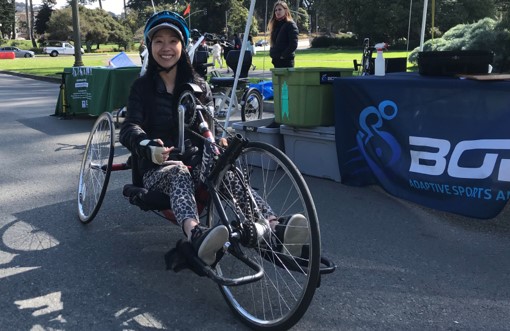
As adaptive bikeshare enthusiasts know, cycling isn’t only for people who are able-bodied. On Saturday, a permanent adaptive cycling program that will serve Golden Gate Park and the Great Highway launched in partnership with San Francisco Recreation & Parks and the Bay Area Outreach and Recreation Program, commonly known as BORP.
The free program matches people with disabilities to adaptive bicycles by advance reservation. The BORP Cycling Center hosts one of the largest collections of adaptive bikes in the world, including handcycles, recumbent bikes, side-by-side tandems, and other models. The program serves children, youth, and adults with physical and sensory disabilities, as well as their family and friends.
The Adaptive Cycling Program will run on Saturdays from 1 to 4 p.m. by appointment only from April through October. Locations will alternate between the Music Concourse in Golden Gate Park next to the new accessible bandshell lot and the Great Highway at Judah Street. To reserve a bike, contact the BORP Cycling Center at 510.848.2930 or cycling@borp.org.
In 2021, the SFMTA and Rec and Park ran a pilot adaptive bikeshare program for people with a broad range of disabilities in Golden Gate Park. The program was held in partnership with the Metropolitan Transportation Commission and Bay Wheels/Lyft. The SFMTA is currently conducting a formal evaluation of the pilot program, but early results tell a clear story: adaptive cycling is a fun and exhilarating option for exercise and recreation.
In both the pilot and new program, BORP staff fit participants to adaptive bikes and help them transfer from their mobility devices when necessary. The pilot program was very popular among participants: survey respondents rated the program 4.76 out of 5 stars and encouraged the City to permanently adopt an adaptive cycling program. Participants shared that the program was a good family outing, with one person coming for the first time on her birthday. Another noted that the program provided a fun and useful way to complete their physical therapy exercises. Seventy-eight percent of participants were first-time adaptive bikeshare riders, and the vast majority of participants surveyed (94%) said they would like to use bikeshare more frequently in the future. The program was popular across age groups: participants had an average age of 38, ranging from 14 to 82 years old.
Reflecting what participants told us they wanted, the new program is near transit, accessible bathrooms and parking, and safe, car-free spaces.
The SFMTA is thrilled to partner with Recreation & Parks and BORP in rolling out a permanent adaptive bike program, and we are also interested in hearing feedback from San Francisco residents and visitors who have not yet had a chance to try out adaptive cycling. If you are an older adult or have disabilities, we want to hear from you! Please help shape the future of adaptive biking in San Francisco by taking our follow-up survey.
Published July 14, 2022 at 07:27AM
https://ift.tt/dSwNhI4
Comments
Post a Comment
If you have any doubt's, please let me know