May is Motorcycle Safety Awareness Month

May is Motorcycle Safety Awareness Month
By Christine Osorio

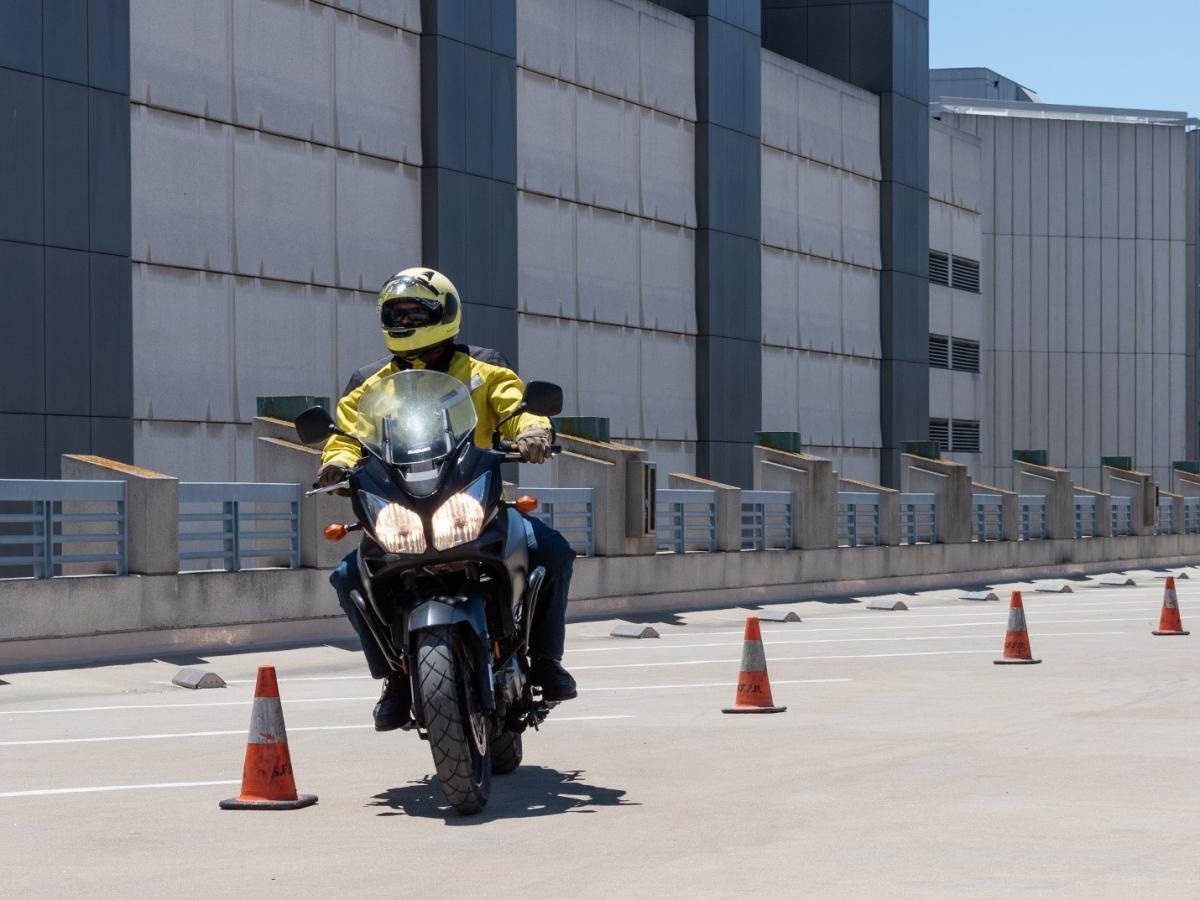
Image of motorcyclist weaving through cones during a motorcycle safety class.

Motorcyclist participating in the 2021 Motorcycle Safety Class.

May is Motorcycle Safety Awareness Month. In San Francisco, motorcyclists remain some of the most vulnerable road users. Over the last few years, the number of registered motorcycles has increased consistently, and it is now common to see motorcycles and scooters in every neighborhood of the city. This presents benefits in the form of reduced congestion and fuel consumption versus private automobiles, but also safety challenges for people who ride motorcycles.  In 2020, motorcyclists comprised 23% of all traffic fatalities, reversing two years of decline for motorcyclists.

To reduce severe and fatal motorcycle crashes, the Vision Zero SF Motorcycle Safety Program was created in 2016. Over the years this program has worked to raise awareness of motorcycle safety through outreach, safety ambassador trainings, and marketing campaigns. The Vision Zero SF Motorcycle Safety Program also increases capacity building within the motorcycle community, partnering with the San Francisco Police Department (SFPD) Traffic Company to provide free hands-on motorcycle skills classes to riders. Classes are conducted by SFPD motorcycle instructors, and participants get one-on-one feedback for how to improve their riding. 

 Riders learn techniques that improve defensive riding and practice drills like:

  • Crash-avoidance drills
  • Emergency maneuvers
  • Going slow with control
  • Proper braking
  • Turning techniques
  • Urban riding drills

Participants cite the class as beneficial in improving their skills and “totally worth it” to learn from experienced motorcyclists from SFPD. The motorcycle classes are funded by the Office of Traffic Safety and is in its third year of offering hands-on classes. Classes begin in May and will run through August.

More information can be found at Motorcycle Safety | Vision Zero SF


Published May 11, 2022 at 07:28PM
https://ift.tt/b2UVejs

Comments

Popular posts from this blog

Introducing My Shocks. 😉 Ciggerate Whatsapp Status (SAD BOYS)#short #shorts #cigarette

via https://youtu.be/RpDENmVEg7M

H. Welton Flynn: A Pioneer in Public Service

H. Welton Flynn: A Pioneer in Public Service By Jeremy Menzies This February for Black History Month we're highlighting one of San Francisco's most important figures in transportation, H. Welton Flynn. Flynn is best known for his key leadership at the SF Public Utilities Commission and as the inaugural chairman of the SFMTA Board of Directors. Mr. Flynn was the first African American appointed to a city commission and served the longest term of any commissioner in San Francisco’s history. He served under six different mayors, being elected to the office of President or Chairman more than a dozen times. Welton Flynn in 1978 during the inaugural run of Muni light rail in the Market Street Subway. Flynn’s leadership on the Public Utilities Commission was crucial during this era of change and adoption of new technology in San Francisco transit. Flynn's long tenure in transit began with his appointment to the Public Utilities Commission, which oversaw Muni operations, in 19...

We Need Your Input

We Need Your Input By Jonathan Streeter People are at the heart of everything we do and we want your input as we develop our Operating and Capital Budgets for Fiscal Years 2021 and 2022.  Every other year, San Francisco’s many agencies and departments must adopt a budget covering the coming two fiscal years by the end of April. The SFMTA is undertaking extensive public outreach on our budget process and our Board of Directors will review the proposed budget at two upcoming public hearings, and is expected to vote on a budget action at its April 21st meeting. The budget is the plan for how the SFMTA collects and spends revenue to operate its divisions – including Muni, Sustainable Streets (street infrastructure and traffic management), Parking and Taxi & Accessible Services. The budget is divided into two main sections: Operating (ongoing costs like staff and maintenance) and Capital (one-time spending on projects like street improvements and new vehicles). Ther...