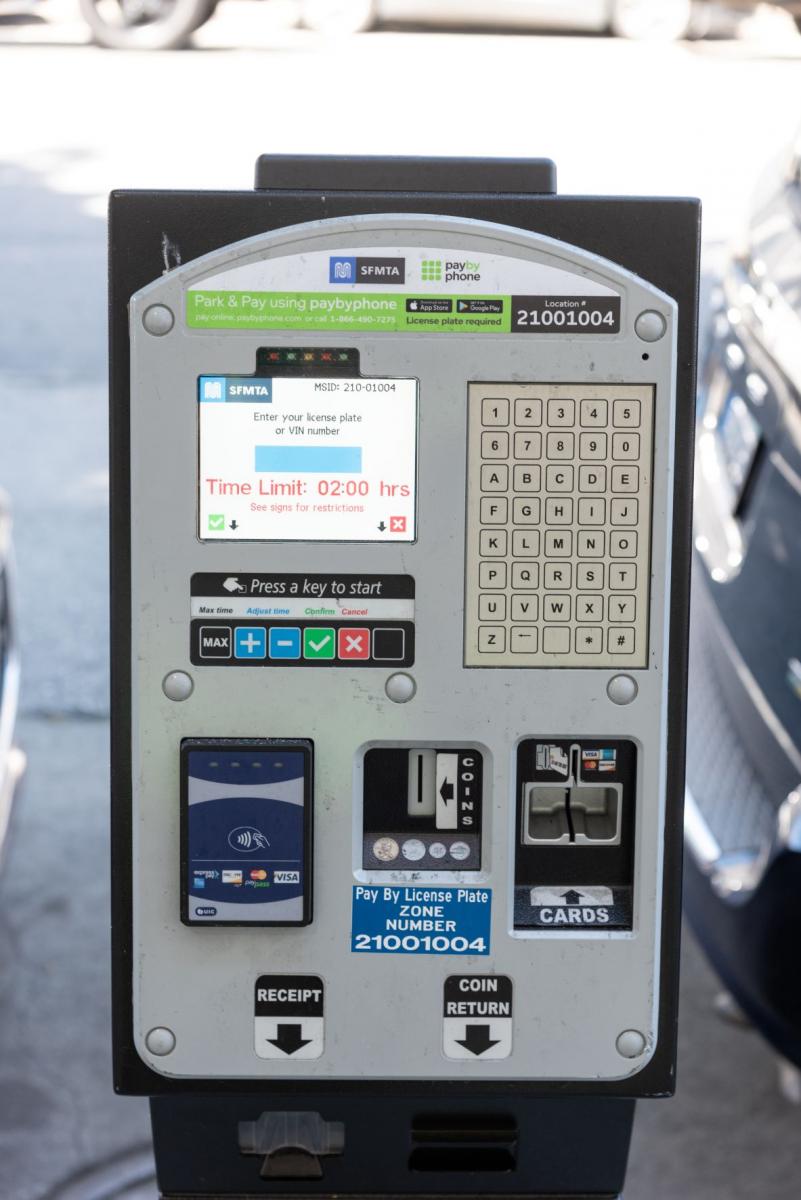
SFMTA to Replace All Parking Meters in the City

SFMTA to Replace All Parking Meters in the City
By Jessie Liang

Test

San Franciscans will see new parking meters on city streets beginning in early March 2022. Staff from the SFMTA’s Parking Meter Shop will replace the meters at all the nearly 27,000 paid parking spaces in the city because those meters have reached the end of their useful lives, and because many of the meters rely on 3G communications technology that soon will be phased out by the wireless companies. The first new meters will be installed in the South of Market and Mission Bay neighborhoods.  SFMTA staff will provide notices on vehicle windshields when the new meters are activated. 

The new meters will provide several benefits, including larger and more legible screens, more intuitive user interface, more powerful batteries, and more resistance to vandalism.  

The following neighborhoods will move to a pay-by-license-plate system with new paystations.

  • South Beach
  • SoMa
  • Mission Bay
  • Civic Center
  • Hayes Valley
  • Fisherman’s Wharf
  • Telegraph Hill
  • Chinatown
  • North Beach
  • Financial District
  • Union Square 

The new system not only makes on-street parking more efficient, but also streamlines enforcement and reduces an estimated $6 million in operating costs over the next decade.  

Pay-by-license-plate, in which you enter your license plate number instead of your space number to pay for parking, gives you the option to pay at any paystation as you head to your destination—simply enter the zone number for the block where you parked. If you pay for parking but leave before your paid time expires, you may return to the same block and park without having to pay again, as long as you are within the original paid timeframe.  

SFMTA tested the new single space meters and the new pay-by-license-plate system in several neighborhoods before undertaking this citywide parking meter replacement project.  For information about a pilot of the pay-by-license-plate system in the Dogpatch neighborhood, click here.  

The purchase of new hardware for the citywide parking meter upgrade project is funded by the SFMTA’s capital budget and will not impact the price you pay at the meter. Parking meter rates will continue to be determined using the agency’s demand-responsive parking pricing program, and more information can be found at the Demand-Responsive Parking page. 

Please visit the Citywide Parking Meter Replacement Project for more details. To learn how to pay for parking at a meter, please visit the SFMTA parking website. 


Published March 17, 2022 at 02:58AM
https://ift.tt/YmCjM4B

Comments

Popular posts from this blog

Slow Streets Program to Help With Social Distancing

Slow Streets Program to Help With Social Distancing By With Muni service temporarily reduced during the COVID-19 health crisis, many San Francisco residents need to walk and take other modes of transportation to make essential trips. However, sometimes it is difficult to maintain 6’ of social distance on many sidewalks, park paths, and bikeways. This can be especially true when passing lines outside grocery stores and other essential services. Because of this, many pedestrians are choosing to walk in the street, exposing themselves to swiftly moving vehicle traffic. The SFMTA is implementing a new program, Slow Streets, to close some streets to through traffic and allow roadways to be used more as a shared space for foot and bicycle traffic. Throughout the city, corridors have been identified for Phase 1 Slow Streets. Beginning this week, some of these streets will be closed to through vehicle traffic to prioritize walking/biking and to provide more space for social distancing duri...

Weight Loss Success Stories: 6 People Share How They Shed Pounds with a High-Protein Diet

Weight Loss Success Stories: 6 People Share How They Shed Pounds with a High-Protein Diet Sarah:  Sarah, a 32-year-old mother of two, struggled with her weight after having her second child. She decided to try a high-protein diet and was able to lose 30 pounds in just three months. She replaced her breakfast with a protein shake, ate a salad with grilled chicken for lunch, and had fish or chicken with vegetables for dinner. Mike:  Mike, a 45-year-old man, had been overweight his entire life. He tried various diets, but none of them worked for him. He decided to give a high-protein diet a try and was able to lose 50 pounds in six months. He ate eggs, chicken, fish, and lean meats for most of his meals and limited his intake of carbohydrates and sugary foods. Emily:  Emily, a 28-year-old woman, had been struggling with her weight since her teenage years. She tried many diets and weight loss programs, but nothing seemed to work for her. She decided to try a high-p...

Celebrating the life and legacy of Harvey Milk

Celebrating the life and legacy of Harvey Milk By Sophia Scherr Today we celebrate and remember the life of San Francisco LGBTQ+ advocate and icon, Harvey Milk. One of our city’s most revered politicians, Milk's legacy as the first openly gay San Francisco supervisor and elected official in California helped in breaking down discriminatory barriers and usher LGBTQ+ politicians in government positions. Milk also advocated for equitable transportation, as he rode Muni exclusively since he did not own a car. He was a firm believer that affordable mobility was important in creating a thriving and livable city. Below is Harvey Milk with Curtis E. Green, General Manager of the Municipal Railway promoting Muni’s “Fast Pass”. Mr. Green was a barrier-breaking figure in his own right, by becoming the first African American appointed to Muni's top position from his beginnings with the Agency as a bus operator. With his 1974 appointment, Green also became the first African American to ...