Muni Customer Satisfaction Survey

Muni Customer Satisfaction Survey
By Jeanne Brophy

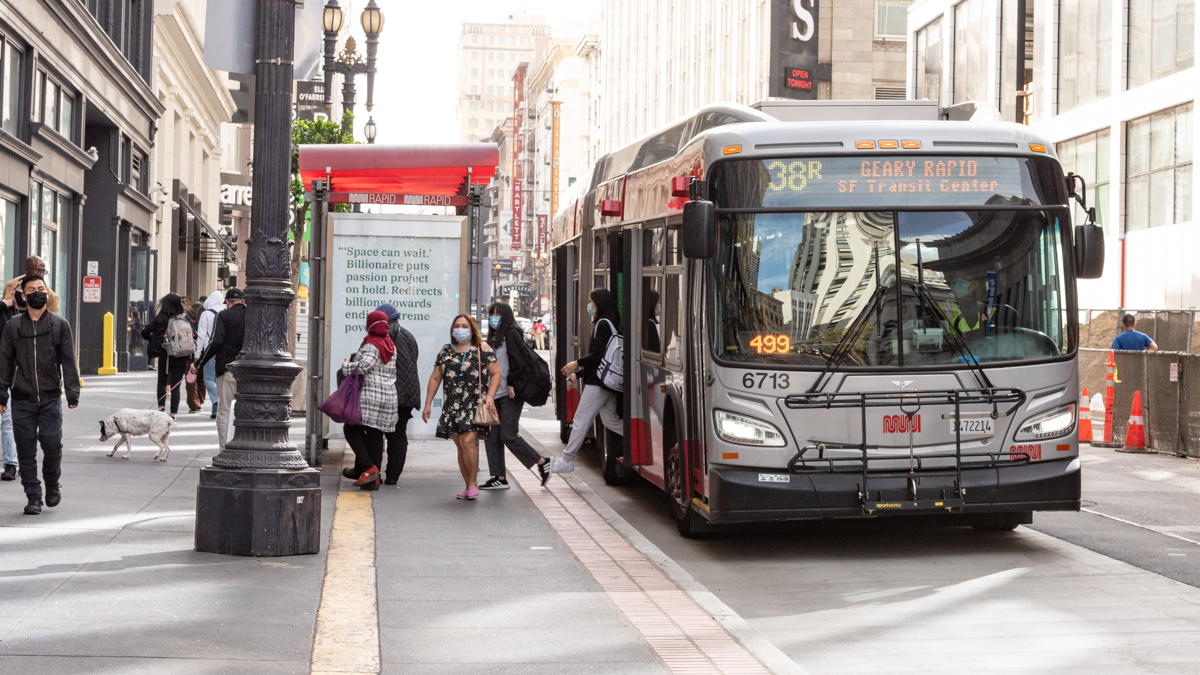
38R and Passengers at bus shelter downtown

The results of the 2021 Muni Customer Satisfaction Survey reflect ridership impacts and concerns during the global pandemic and a local shelter-in-place order. As a result, Muni reduced service and experienced significantly lower ridership demand.  Muni was able to provide service to essential workers along with protecting its front-line workforce and the overall financial outlook for the agency.

Survey respondents gave us a 57 percent overall positive satisfaction rating. Topping the customer list of most important attributes were accessibility, cleanliness, and operator helpfulness.

Highlights of the 2021 Muni survey:

  • 57 percent of Muni riders rate its overall service as “good” or “excellent” – a 2% decline from 2019
  • Low-income riders rate Muni service higher now than before the pandemic indicating our data-driven service delivery was aligned to the public need of focusing on essential workers and the transit dependent:
    • < $25,000 income category rate “excellent/good:” 63% up 9% vs. 2019
    • $25,000-$50,000 income category rate “excellent/good:” 74% up 8% vs. 2019
  • In 2019, nearly three-quarters (72%) of riders rode Muni once a week. Since the start of the pandemic*, this has decreased to just over half (52%)
  • 79 percent rate Muni’s accessibility for people with disabilities as “excellent” or “good” – an increase of 8% from 2019 -- Muni’s best rated attribute by respondents
  • 60 percent rate the cleaning of Muni vehicles “excellent” or “good”—an increase of 11%--our biggest gain this survey period
  • 70 percent rate transit operator helpfulness as Muni’s best attribute – up 4% since the last survey. We appreciate our front-line operators for their service delivery to essential workers throughout the pandemic

How We Gather Results
The 2021 survey project used a hybrid approach, blending both telephone interviews and online surveys to collect feedback from adult San Francisco residents. A total of 413 interviews were conducted during the period of August 17, 2021, to October 6, 2021. This survey was established to track the level of satisfaction that Muni riders have with our service. Using this tracker, progress can be tracked over time and measure the impacts of changes that have been implemented to improve service. 

PDF icon Ridership Survey 2021: Executive Summary and Questionnaire

PDF icon Ridership Survey 2021: Report Crosstabs and Accessible Data


Published March 05, 2022 at 12:25AM
https://ift.tt/2KurEPZ

Comments

Popular posts from this blog

Celebrating the life and legacy of Harvey Milk

Celebrating the life and legacy of Harvey Milk By Sophia Scherr Today we celebrate and remember the life of San Francisco LGBTQ+ advocate and icon, Harvey Milk. One of our city’s most revered politicians, Milk's legacy as the first openly gay San Francisco supervisor and elected official in California helped in breaking down discriminatory barriers and usher LGBTQ+ politicians in government positions. Milk also advocated for equitable transportation, as he rode Muni exclusively since he did not own a car. He was a firm believer that affordable mobility was important in creating a thriving and livable city. Below is Harvey Milk with Curtis E. Green, General Manager of the Municipal Railway promoting Muni’s “Fast Pass”. Mr. Green was a barrier-breaking figure in his own right, by becoming the first African American appointed to Muni's top position from his beginnings with the Agency as a bus operator. With his 1974 appointment, Green also became the first African American to ...

By The Numbers: The SFMTA’s COVID-19 Response

By The Numbers: The SFMTA’s COVID-19 Response By Erica Kato The COVID-19 pandemic has brought about unforeseen c hanges to San Francisco’s transportation network. And the impact of the crisis will continue to be felt city-wide long beyond the end of the public health emergency. On March 13, 2020, when it became clear that San Francisco needed immediate adjustments to the transportation system, Director of Transportation Jeff Tumlin launched SFMTA’s Department Operations Center (DOC) team. Since then, the DOC has served as a centralized hub to ensure that we are minimizing health risks to employees and the public as we keep transportation running, both by coordinating internally within the agency and by collaborating closely with our city, state, and federal partners to deploy resources and information in the most effective way possible. San Francisco's response to the COVID-19 pandemic included implementing temporary emergency transit lanes  Our COVID-19 response has chal...

Slow Streets Program to Help With Social Distancing

Slow Streets Program to Help With Social Distancing By With Muni service temporarily reduced during the COVID-19 health crisis, many San Francisco residents need to walk and take other modes of transportation to make essential trips. However, sometimes it is difficult to maintain 6’ of social distance on many sidewalks, park paths, and bikeways. This can be especially true when passing lines outside grocery stores and other essential services. Because of this, many pedestrians are choosing to walk in the street, exposing themselves to swiftly moving vehicle traffic. The SFMTA is implementing a new program, Slow Streets, to close some streets to through traffic and allow roadways to be used more as a shared space for foot and bicycle traffic. Throughout the city, corridors have been identified for Phase 1 Slow Streets. Beginning this week, some of these streets will be closed to through vehicle traffic to prioritize walking/biking and to provide more space for social distancing duri...