Omicron Surge Impact on Muni Routes and Schedules

Omicron Surge Impact on Muni Routes and Schedules
By Julie Kirschbaum

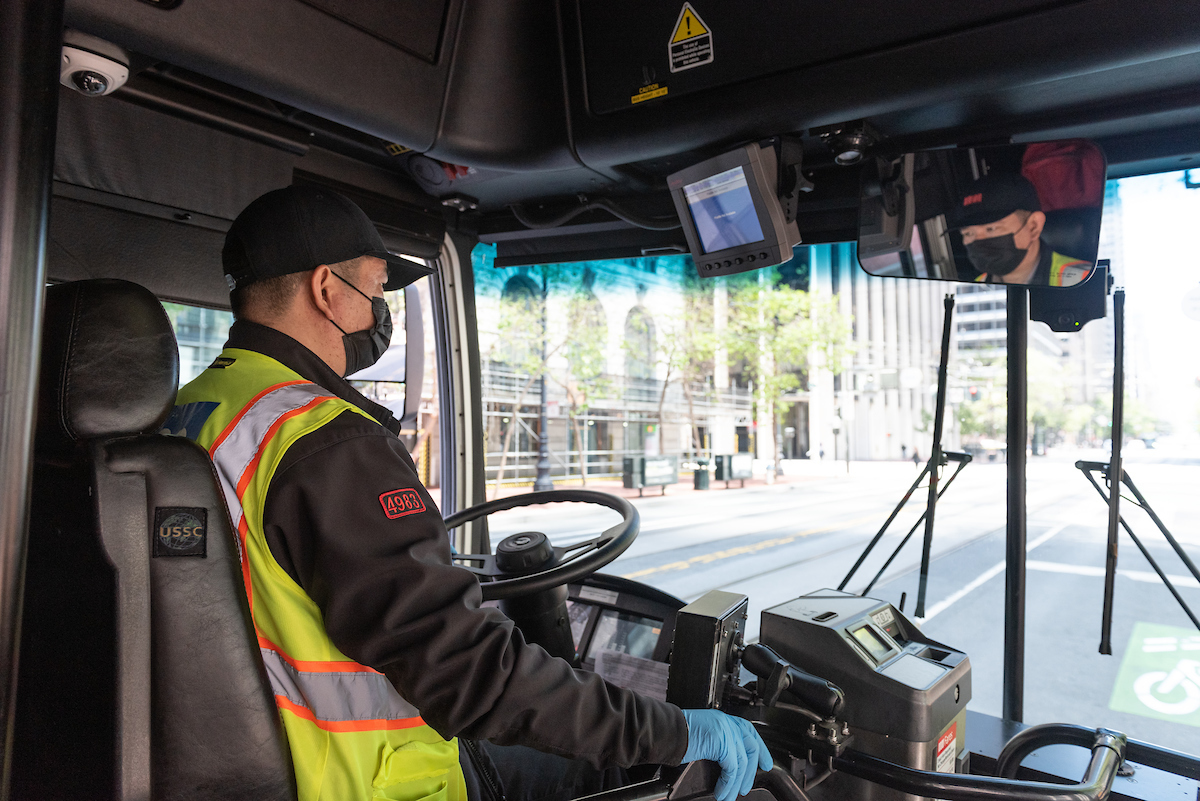
Photo of a bus operator wearing a mask

As has been reported widely in the media, the highly contagious Omicron variant has led to rapid and unprecedented spread of the COVID-19 virus in San Francisco. More than 100 SFMTA staff have contracted COVID since late last month. Combined with pre-existing staffing shortages, this has led to an increase in missed Muni service. We’re also experiencing staffing impacts in other job classifications, including mechanics, car cleaners and transit supervisors. 

Currently, we are missing up to 15% of scheduled Muni service, which means that riders may need to wait longer than usual for their bus or train. Our hope is that this will be the extent of our impacts. However, the situation is fluid, and we are monitoring staffing levels on a daily basis.

As part of our contingency planning, we are preparing for what might happen if our overall staffing levels drop significantly or if a small, but vital group—such as our Transit Management Center or Power Control Center is significantly impacted. Either of these situations could leave us with no choice but to make additional Muni service reductions such as cancelling routes or introducing bus substitutions for rail service.

We are doing our best to avoid this situation by communicating proactively with staff about masking and staying home if they have any symptoms and keeping some staff working vital functions at remote locations to limit exposure. We are grateful that nearly 100% of the SFMTA workforce is vaccinated, and we are encouraging boosters as an effective precaution. We are also doing hard work behind the scenes to prepare signage, operator instructions, and all the other materials we would need to implement changes as smoothly as possible — in the case these become necessary.

For the latest information on service changes, please visit our Core Service webpage. You can also find our latest updates by subscribing to Muni alerts or visiting our Twitter feed.


Published January 08, 2022 at 03:40AM
https://ift.tt/3G9cRbZ

Comments

Popular posts from this blog

Celebrating the life and legacy of Harvey Milk

Celebrating the life and legacy of Harvey Milk By Sophia Scherr Today we celebrate and remember the life of San Francisco LGBTQ+ advocate and icon, Harvey Milk. One of our city’s most revered politicians, Milk's legacy as the first openly gay San Francisco supervisor and elected official in California helped in breaking down discriminatory barriers and usher LGBTQ+ politicians in government positions. Milk also advocated for equitable transportation, as he rode Muni exclusively since he did not own a car. He was a firm believer that affordable mobility was important in creating a thriving and livable city. Below is Harvey Milk with Curtis E. Green, General Manager of the Municipal Railway promoting Muni’s “Fast Pass”. Mr. Green was a barrier-breaking figure in his own right, by becoming the first African American appointed to Muni's top position from his beginnings with the Agency as a bus operator. With his 1974 appointment, Green also became the first African American to ...

Introducing My Shocks. 😉 Ciggerate Whatsapp Status (SAD BOYS)#short #shorts #cigarette

via https://youtu.be/RpDENmVEg7M

By The Numbers: The SFMTA’s COVID-19 Response

By The Numbers: The SFMTA’s COVID-19 Response By Erica Kato The COVID-19 pandemic has brought about unforeseen c hanges to San Francisco’s transportation network. And the impact of the crisis will continue to be felt city-wide long beyond the end of the public health emergency. On March 13, 2020, when it became clear that San Francisco needed immediate adjustments to the transportation system, Director of Transportation Jeff Tumlin launched SFMTA’s Department Operations Center (DOC) team. Since then, the DOC has served as a centralized hub to ensure that we are minimizing health risks to employees and the public as we keep transportation running, both by coordinating internally within the agency and by collaborating closely with our city, state, and federal partners to deploy resources and information in the most effective way possible. San Francisco's response to the COVID-19 pandemic included implementing temporary emergency transit lanes  Our COVID-19 response has chal...