By Pamela Johnson
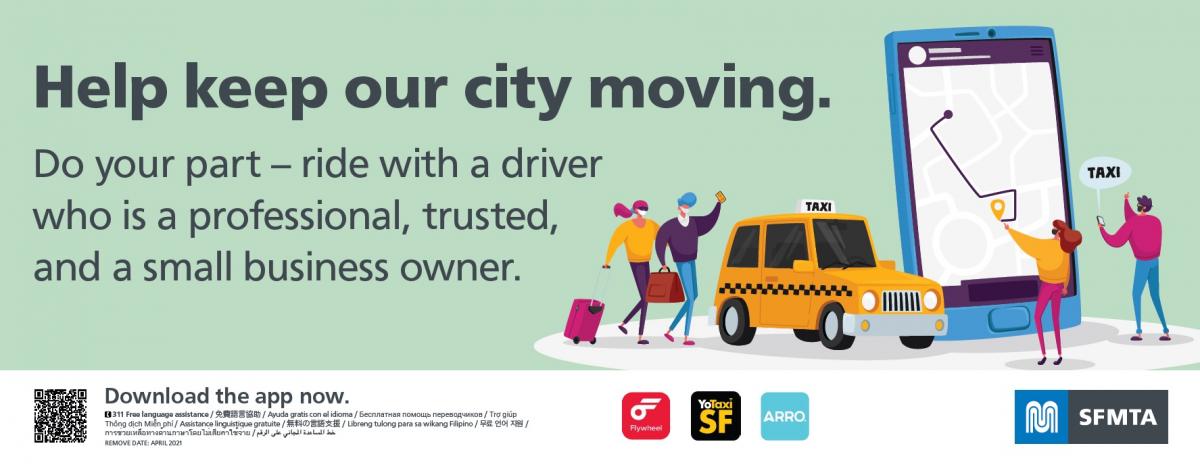 Taxi drivers are an integral part of what makes San Francisco unique and contribute to the city's economic vitality. They are essential workers playing a vital role in our transportation network. Each driver works to move people safely and efficiently from one destination to another on their daily journey.
And, importantly, taxis are small businesses. Taxi drivers are trained and experienced professional drivers who obtain a permit to operate and pay taxes.
To promote taxi ridership in San Francisco, the SFMTA launched our Taxi Marketing Campaign on January 3, 2022. The campaign is based on input taxi drivers provided in discussions with the SFMTA and an initial campaign to test key marketing messages. The drivers talked and we listened --doing all we could to increase taxi ridership.
During the Covid-19 Pandemic, taxis got people to their health appointments, the pharmacist, the grocery store to buy food, restaurants to pick up a meal, or helped them meet other essential transport needs. They are also vital to San Francisco’s hospitality and tourism industry and are often the first contact with people entering our beautiful city.
Over the past decade, taxis in San Francisco have experienced a significant decline in ridership. Customers have been incentivized to instead summon rides through rideshare companies like Uber and Lyft which offer venture capital subsidized pricing, unlimited supply, and minimal regulations and enforcement from the California Public Utilities Commission. Taxi drivers took a brutal financial hit, with many barely hanging on financially. Recently, these ride-sharing hailing companies have raised their prices, and more customers are finding that taxis are a viable and less expensive option and have once again returned to requesting taxis. This offers hope to drivers and the economy as the city reopens from restrictions associated with the Covid-19 pandemic.
Taxis are a logical choice for transportation since drivers are reliable and experienced professionals who are familiar with the city. Our drivers have also gone through fingerprint background checks so you can rest assured of a safe ride. In addition, we have established regular cleaning protocols for a clean, healthy ride during the pandemic.
The Ease and Convenience of Taking a Taxi
Taxis are the only passenger vehicles authorized to use transit lanes, sharing them with buses and other efficient transportation modes. And the industry's low-emissions vehicles create a green fleet that offers a better choice for the environment.
Finding a ride and paying for it have never been easier, with the ease and convenience of smartphone-based apps.
To become a taxi driver in San Francisco, an individual must be trained in local traffic laws, driver, safety, the local street layout, communications equipment, and customer service.
Use an App
You can request a taxi through Smartphone-based apps, Flywheel, Yo Taxi, and ARRO that allow for ease and convenience of payment.
The SF taxi booking apps connect you to taxis in San Francisco with the tap of a button.
Download the app of your choice to request your ride, and make your contactless payment, or if you prefer, you may pay the taxi driver directly.
The SFMTA’s Taxis, Access & Mobility Services Division regulates the city’s taxi operations. To operate a taxi in the city, the driver must have a permit and operate a vehicle that has a taxi medallion. The medallion is a permit to provide service in San Francisco. The drivers who purchased a medallion have invested a lot of time and money for the right to operate a taxi on city streets. These drivers often take out bank loans to start their businesses.
As you travel to your next destination, remember to Support a small business and take a taxi!
Please visit the SFMTA on the web to learn more about the city’s taxis and services.
Published January 07, 2022 at 10:35PM
https://ift.tt/3qWrDg3
Comments
Post a Comment
If you have any doubt's, please let me know