By Nehama Rogozen
Muni and Golden Gate Transit staff recently conducted important bus operations testing that is an important step towards the Van Ness Bus Rapid Transit (BRT) corridor opening this spring. This testing included emergency turns and maneuvers, repositioning buses, verifying signals are working, clearances between passing buses and safe turns while bike racks are deployed.
The training also included several staff. Traffic engineers made sure traffic and transit signals were working and reviewed street markings. Transportation planners coordinated closely with operations, training, engineering and construction staff to make necessary adjustments. Outreach staff and ambassadors answered questions and made sure customers knew testing was taking place. Field managers and operators provided suggestions for improvements based on experience.
Since most Muni operators are new to operating a bus on a BRT corridor, operators will be trained on the new system over the coming weeks. To ensure that their training is as robust as possible, trainers from Muni and Golden Gate Transit participated in the testing activities to see what additional skills operators will need to learn.
The Van Ness Improvement Project is bringing San Francisco’s first BRT corridor that will improve transit service and address traffic congestion on Van Ness Avenue, in addition to providing extensive utility upgrades, civic improvements and safety enhancements.
We know that this project has been a long ride for the community, and we are eagerly preparing for several opening activities to celebrate the new BRT corridor. These will include a ribbon-cutting, lighting of the public light sculpture, family-friendly activities and ways to support Van Ness businesses.
During testing, our ambassadors heard lots of positive feedback from people walking. A parent remarked that it would be easier to take her daughter to school on the bus, while someone else noted that an ambulance successfully used the red lanes to cut through traffic, saying, “Wow! I didn’t think about it until now, but I see how this is not only good for those of us riding the bus, but also really good for emergency services!” Someone else commented that the BRT system, despite delays, “was well worth the wait.”
In the meantime, there remain a few more specific turns that need to be tested, so if you see buses in the median, please do not attempt to board them. Sidewalk signage is directing customers to the correct stops that are currently boarding from the sidewalk curb. We look forward to welcoming you aboard buses in the BRT corridor in just a couple of months.
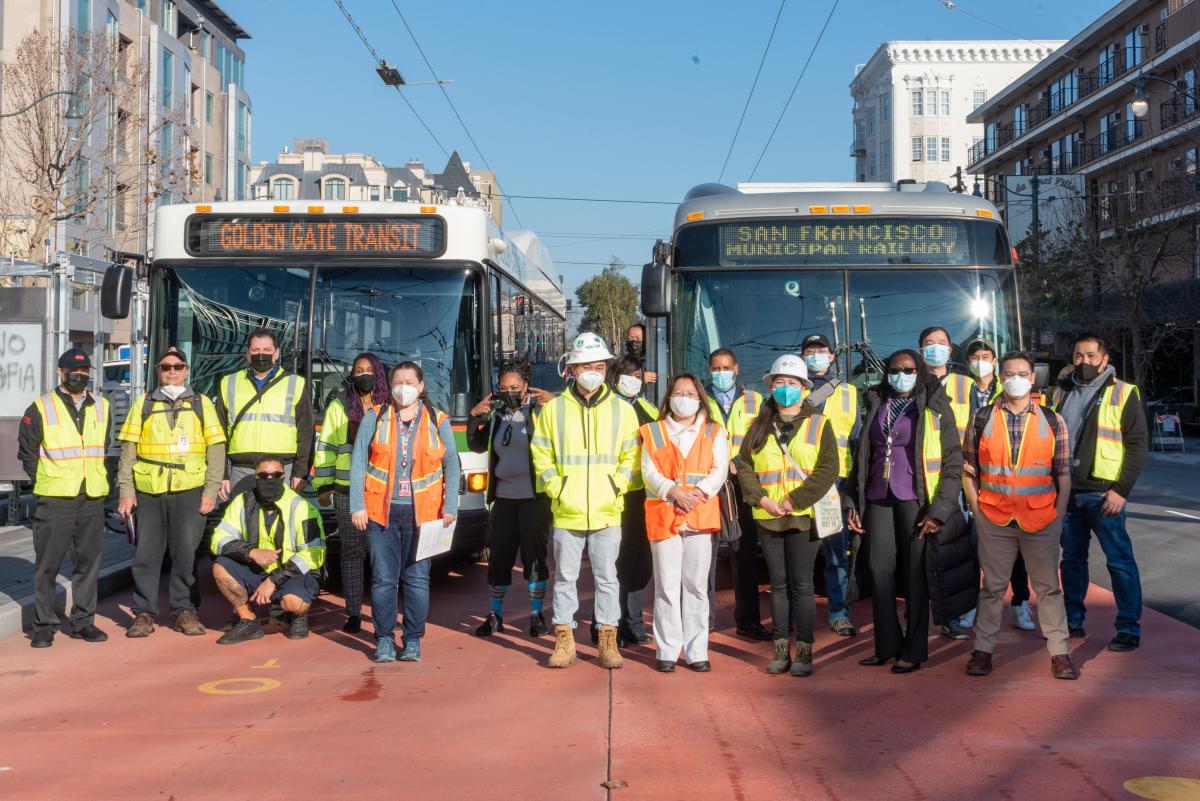
Staff from Muni and Golden Gate Transit in front of revenue vehicles before testing begins.
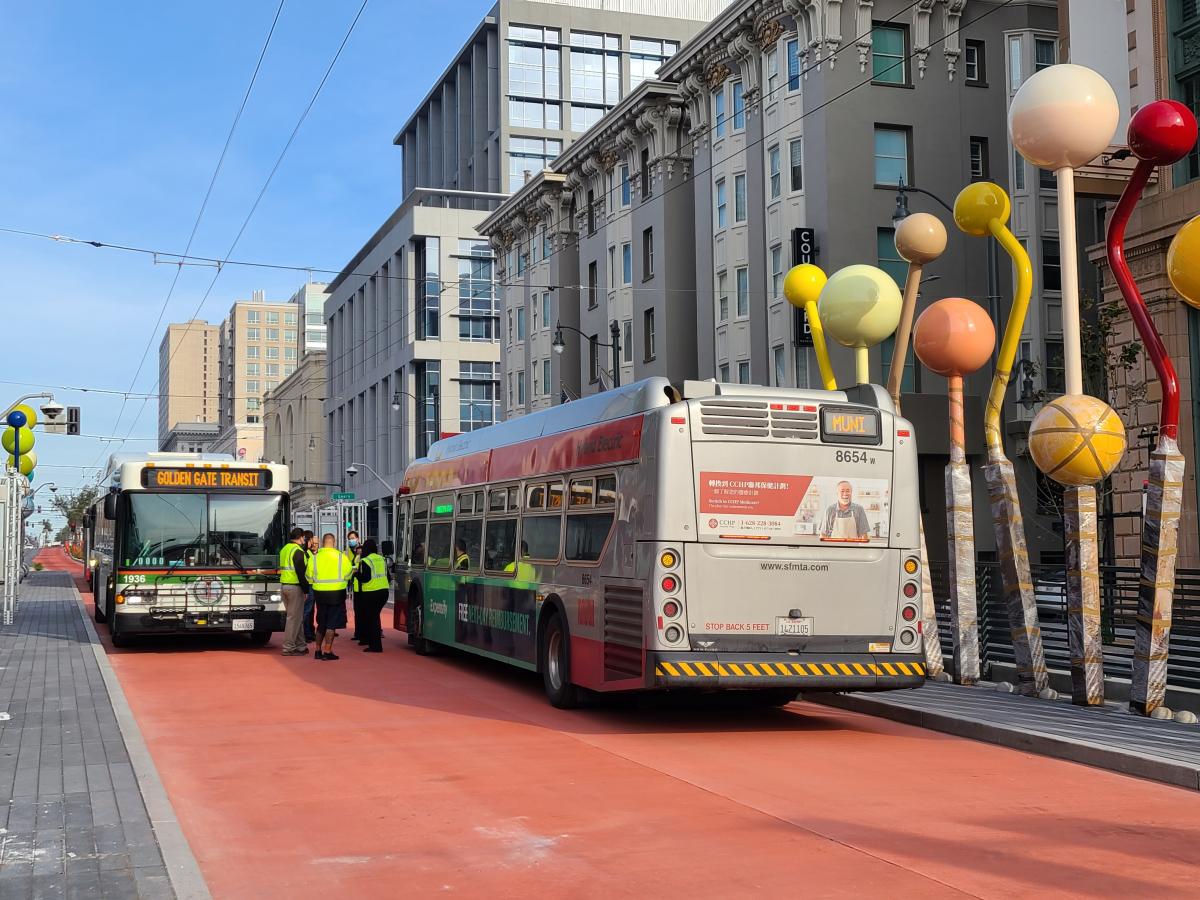
Staff measure passing distances between a Golden Gate Transit bus and a Muni bus at the Geary-O'Farrell BRT stop, where public artwork is being installed.
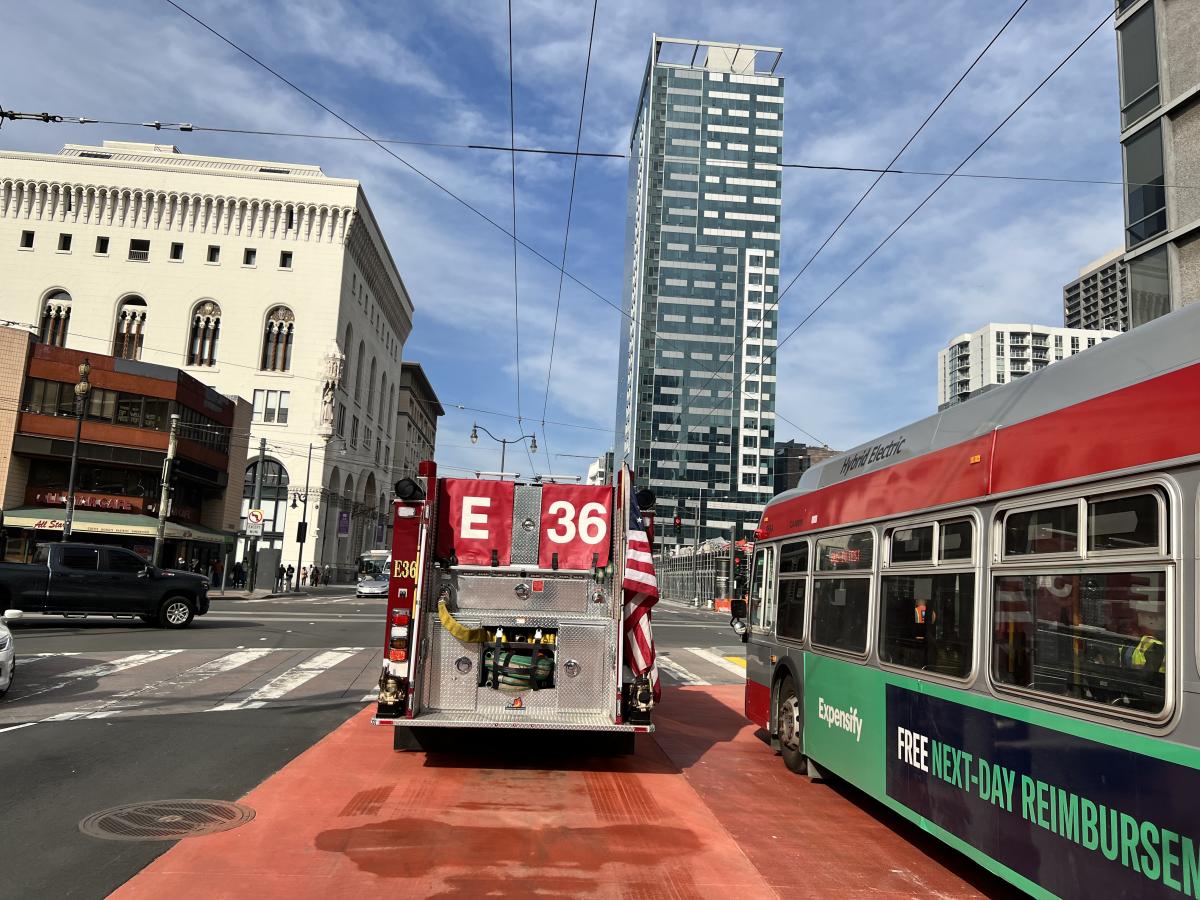
A fire truck uses the red lanes to bypass traffic on Van Ness.
Published January 26, 2022 at 03:35AM
https://ift.tt/3tYnE5D
Comments
Post a Comment
If you have any doubt's, please let me know