By Bonnie Jean von Krogh
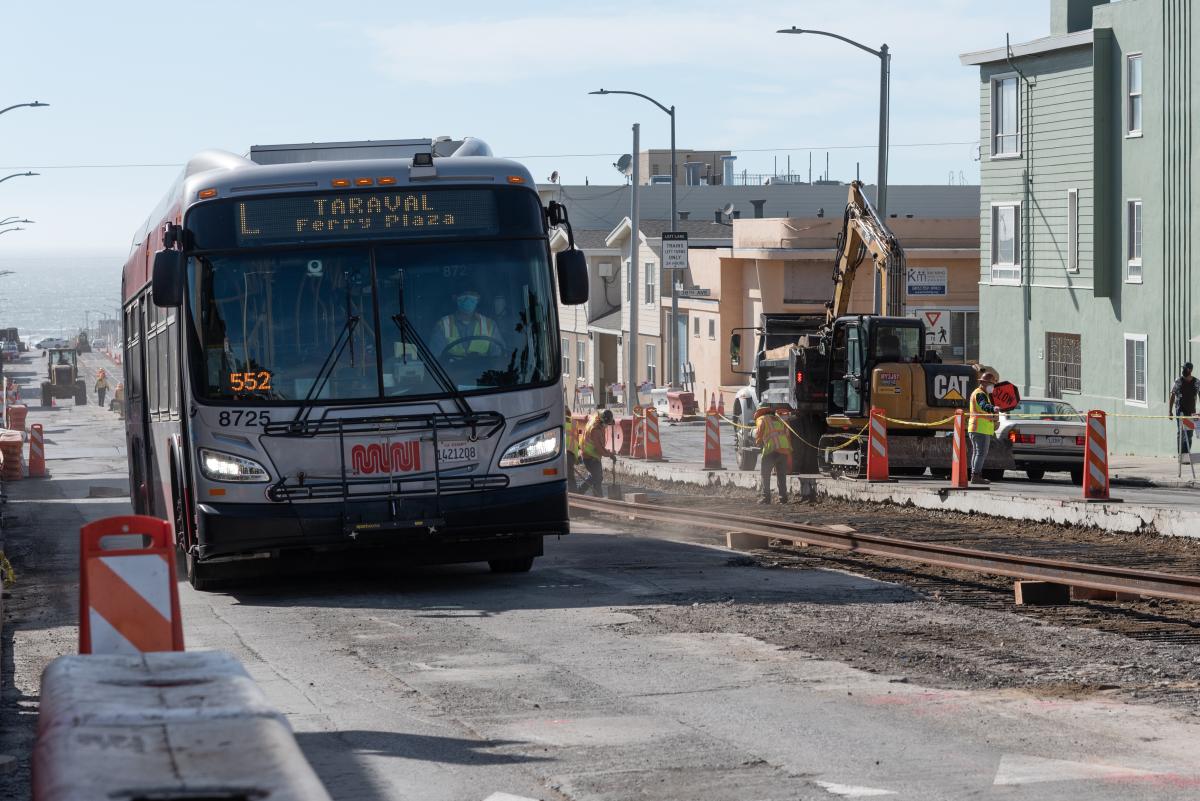 L Taraval Bus passing by construction on Taraval Street
Reliable transit and safe streets are essential to making San Francisco an equitable and just city. In these truly unprecedented times, the SFMTA has worked hard to sustain critical services and buy time for our revenues to recover before current federal relief funding runs out.
But some investments in our transportation infrastructure just can’t wait. That’s why two mayoral transportation community task forces over the last eight years (Transportation 2030 and Transportation 2045) recommended a General Obligation (GO) Bond. The city’s 10-Year Capital Plan calls for a Transportation GO bond on the June 2022 ballot.
The bond proposal focuses on your top priorities. It would keep Muni equipment and facilities working efficiently, provide quick and convenient transit access, improve Muni service for communities that depend on transit, ensure Muni service is inclusive and accessible to all and make street safety improvements for people walking and biking.
Proposed Bond Program Components
Make the Transportation System Work Better
- Speed up Muni repairs and keep public transit moving by repairing, upgrading and maintaining aging facilities and equipment
- Enable faster, more reliable, and more frequent Muni service by improving public transit infrastructure
- Increase subway capacity, reduce delays, and deliver dependable, high-frequency transit by modernizing the Muni train control system
Many Muni bus yards were built decades ago, with some over one hundred years old. While addressing all of SFMTA’s facility needs requires a variety of funding solutions, this proposed bond can fund high-priority needs to repair Muni buses faster, preventing breakdowns and supporting reliable Muni service.
Our train control system is also over 20 years old. Upgrading it will allow us to run longer trains to reduce crowding, increase speed in the subway and improve reliability for surface trains. These improvements can help Muni Metro become a modern rail system to better service our growing communities by providing fast service that is reliable.
Improve Street Safety and Traffic Flow
- Improve safety and visibility at intersections by upgrading traffic signals, signage and crossings
- Strengthen walking, bicycling and Muni connections along major corridors by redesigning streets and sidewalks
- Slow speeds and reduce crashes by implementing proven traffic calming and speed reduction tools
The proposed bond can improve safety, accessibility and visibility for people walking and biking. Streets in historically disadvantaged communities are almost twice as likely to be on the High Injury Network, where we see the most deaths and serious injuries on our streets. The proposed bond includes funds to make strategic street safety and visibility improvements with an equity focus by prioritizing communities with a high percentage of households with low incomes and people of color.
By funding traffic signal upgrades with safety features for people walking, we can make intersections work better for everyone, especially people with disabilities, older people and children. Redesigning streets with wider sidewalks, curb ramps, safer bikeways and traffic calming elements are proven tools to make streets safer and more accessible for all. These improvements are in support of the city’s Vision Zero policy goal to eliminate all traffic deaths in San Francisco.
Street improvements will also help us reduce travel times and delays for Muni. Proven successes include smart traffic signals that give Muni priority, wider sidewalks at bus stops for easier, more accessible boarding, and dedicated transit lanes to keep buses moving.
When buses run faster and are not stuck in traffic, Muni can service more people with the same number of vehicles and drivers. This saves money that can be reinvested elsewhere in the system.
Next Steps
Under-investment in transportation has been a decades-long trend that can’t be fixed with any single revenue source. Visit our Transportation 2050 website for more information about SFMTA’s effort to chart a more sustainable course with your help. The GO Bond would provide a dedicated local funding source that can help meet San Francisco’s transportation needs.
The bond proposal will be presented for feedback at a number of public hearings including the SFMTA Citizens’ Advisory Council, the SFMTA Board Policy and Governance Committee, the SFMTA Board of Directors and the city’s Capital Planning Committee.
Published October 08, 2021 at 05:01AM
https://ift.tt/3iCutn1
Comments
Post a Comment
If you have any doubt's, please let me know