By Mariana Maguire
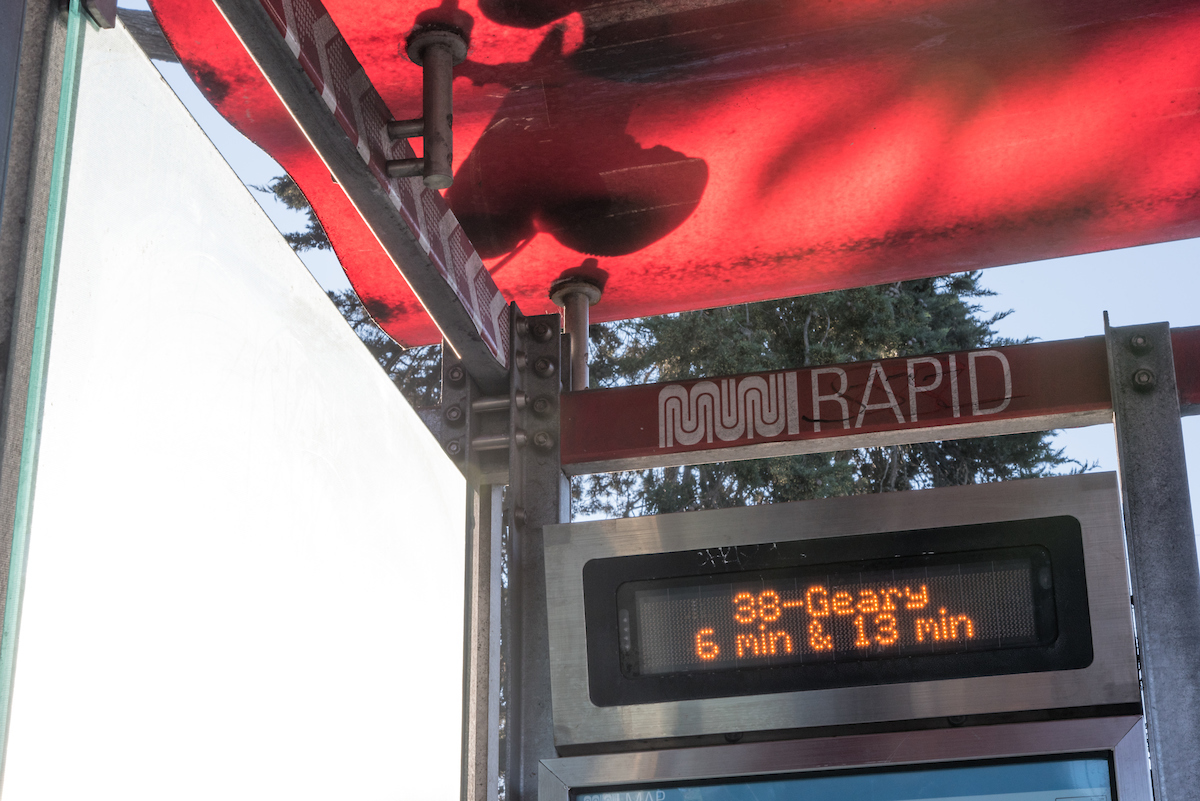
When the SFMTA first partnered with NextBus more than twenty years ago to create NextMuni, the real-time transit vehicle arrival predictions system was state-of-the-art and revolutionary for its time. As technology has advanced and our transit system has grown, we are moving to a new system that will best meet the needs of our customers.
Last year, the SFMTA Board of Directors and the Board of Supervisors approved a contract for the Next Generation Customer Information System to replace NextMuni. Set to debut in 2022, the new Customer Information System will focus on improving predictions accuracy, particularly near the beginning of routes, along with several other customer-friendly upgrades. New, larger graphical signs in transit shelters will also feature maps showing the real-time positions of vehicles. These enhancements will help improve the customer experience and make riding transit easier.
While the SFMTA has been working on the Customer Information System initiative, we are still providing customers with the best information possible within the existing NextMuni system's technical limitations. This week, we've made some interim upgrades that will make it easier for customers to navigate around the system and learn about the August 14 service changes.
New NextMuni Improvements
We have optimized NextMuni for the SFMTA website, which means some new conveniences for customers navigating Muni, and important, customer-tested accessibility features:
- Customers can now stay on the SFMTA website for NextMuni predictions
- Arrival predictions are integrated with stop information rather than being in two different places
- For Muni stop information and self-updating predictions, typing SFMTA.com/ followed by the 5-or-6-digit Muni stop ID number takes customers directly to the Muni stop web page with details
- Muni stop pages provide both a vehicle-tracking map and a vicinity map integrated with the predictions and stop information
- Muni stop pages link to nearby transit stops so customers can consider alternative routes
What to Expect During August 14 Service Changes
Whenever the SFMTA implements a large service change, we usually receive many questions about NextMuni. In fact, you may see some lag in NextMuni updates when our next round of service changes goes into effect on August 14. To help explain, here are some answers to frequently asked questions:
Why are predictions sometimes inaccurate after a service change?
For new and restored routes, it usually takes a few days after the service starts for accurate arrival time predictions to begin appearing. This is because the NextMuni software generates predictions based on the vehicle travel times it learns over time. When a line is new or restored, there are no travel time records. Since it's starting from scratch, the software needs a few days’ worth of data to learn travel times and generate more accurate predictions.
Why are arrival time predictions not showing on the NextMuni displays?
Stops near the beginning of routes may not show arrival time predictions. For high-frequency routes, the SFMTA operates "headway-managed" service by maintaining even spacing between vehicles rather than following set time schedules. Stops near the beginning of these routes will not show arrival time predictions unless a vehicle is already on its way. This helps reduce the “ghost bus” phenomenon where the NextMuni sign counts down the time a vehicle arrival but the vehicle never arrives.
Why aren't new or restored routes showing on the NextMuni displays?
New and restored routes must be in service before their information can be loaded into the sign display system. As soon as service starts, NextMuni personnel begin the process of adding routes to the appropriate signs. Once sign configuration is complete, which typically takes a few hours, the NextMuni system is restarted and signs should show the new and restored routes. If you believe a sign is not displaying the correct route, please let us know by contacting 311 or Muni Customer Service at 415.701.2311.
Published August 13, 2021 at 02:05AM
https://ift.tt/3CMUHMa
Comments
Post a Comment
If you have any doubt's, please let me know