Muni’s COVID-19 Distancing Requirement to End on June 15

Muni’s COVID-19 Distancing Requirement to End on June 15
By Kristen Holland

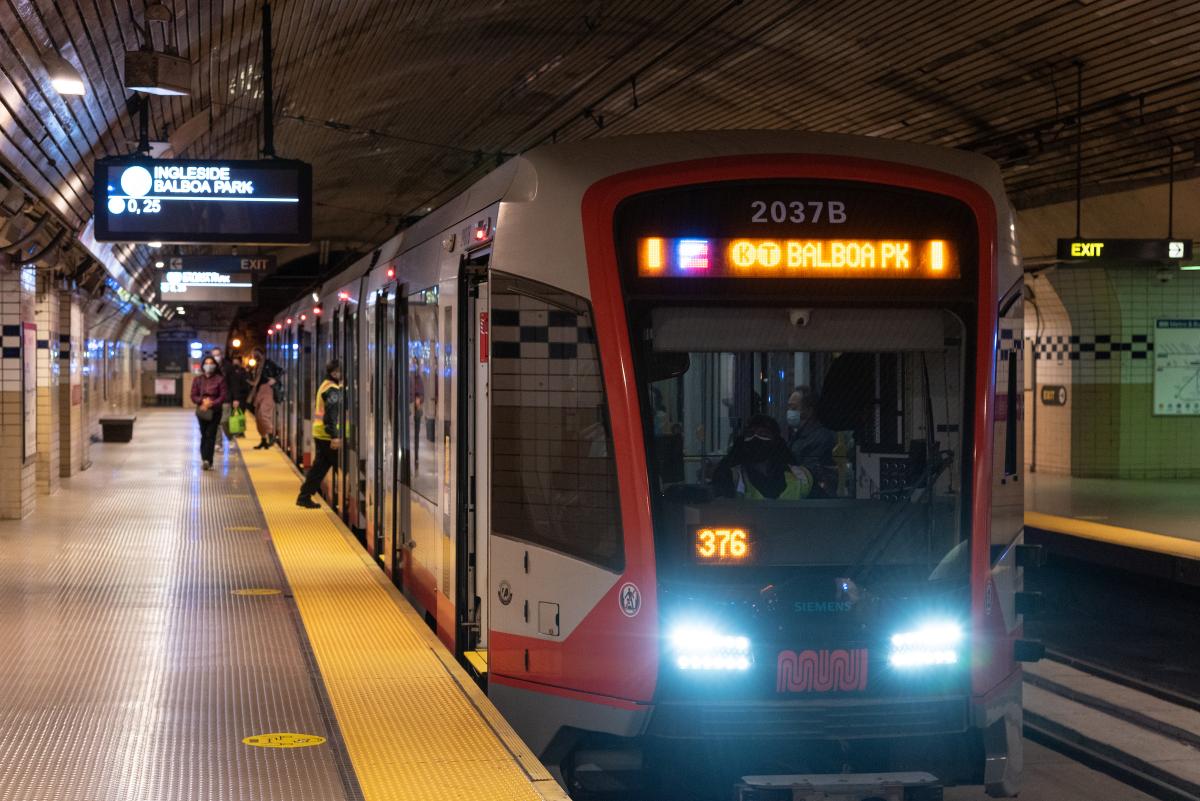
Photo of passengers entering K/T train at Forest Hill Station

As of June 15, Muni will no longer require physical distancing between customers. San Francisco’s Health Officer has confirmed that we may eliminate this requirement to coincide with the broader statewide reopening campaign. The federal requirement to wear masks still applies while waiting for, paying for, and riding on Muni. Customers must also maintain a six-foot distance from operators.

Thanks to the leadership of Mayor London Breed and the Department of Public Health (DPH), our community has extremely high citywide vaccination rates and the lowest case rates since the beginning of the pandemic. This means that more riders will be permitted onboard each vehicle, which will reduce pass-ups and allow us to restore additional service later this summer.

For the past year, physical distancing regulations and other pandemic constraints required us to consolidate Muni service to a reduced number of routes, ensuring sufficient capacity for essential trip-takers. With these regulations relaxing, more Muni coverage is on the way, but your trip might look a bit different, with some new lines and temporary reroutes. These changes allow us to continue to safely provide more transit to more people.

Eliminating distancing requirements will allow us to implement additional Muni service planned for August, which is contingent on increasing passenger capacity per vehicle. Muni will no longer need as many buses on certain routes to compensate for the reduced capacity. With each vehicle able to carry more riders, the extra vehicles can get shifted to other routes and areas not previously served.

Please remember that regardless of vaccination status, masks and staying six feet away from operators will still be required onboard to comply with both federal transportation and state worker safety mandates.

Public health and safety remain our top priorities as Muni service expands. We are working with our transit operators to detail health and safety protocols and with DPH to implement science-based practices that protect staff and the public during the pandemic.  


Published June 11, 2021 at 09:33PM
https://ift.tt/2TsOvGI

Comments

Popular posts from this blog

Celebrating the life and legacy of Harvey Milk

Celebrating the life and legacy of Harvey Milk By Sophia Scherr Today we celebrate and remember the life of San Francisco LGBTQ+ advocate and icon, Harvey Milk. One of our city’s most revered politicians, Milk's legacy as the first openly gay San Francisco supervisor and elected official in California helped in breaking down discriminatory barriers and usher LGBTQ+ politicians in government positions. Milk also advocated for equitable transportation, as he rode Muni exclusively since he did not own a car. He was a firm believer that affordable mobility was important in creating a thriving and livable city. Below is Harvey Milk with Curtis E. Green, General Manager of the Municipal Railway promoting Muni’s “Fast Pass”. Mr. Green was a barrier-breaking figure in his own right, by becoming the first African American appointed to Muni's top position from his beginnings with the Agency as a bus operator. With his 1974 appointment, Green also became the first African American to ...

Introducing My Shocks. 😉 Ciggerate Whatsapp Status (SAD BOYS)#short #shorts #cigarette

via https://youtu.be/RpDENmVEg7M

By The Numbers: The SFMTA’s COVID-19 Response

By The Numbers: The SFMTA’s COVID-19 Response By Erica Kato The COVID-19 pandemic has brought about unforeseen c hanges to San Francisco’s transportation network. And the impact of the crisis will continue to be felt city-wide long beyond the end of the public health emergency. On March 13, 2020, when it became clear that San Francisco needed immediate adjustments to the transportation system, Director of Transportation Jeff Tumlin launched SFMTA’s Department Operations Center (DOC) team. Since then, the DOC has served as a centralized hub to ensure that we are minimizing health risks to employees and the public as we keep transportation running, both by coordinating internally within the agency and by collaborating closely with our city, state, and federal partners to deploy resources and information in the most effective way possible. San Francisco's response to the COVID-19 pandemic included implementing temporary emergency transit lanes  Our COVID-19 response has chal...