By Jeremy Menzies
Located on the corner of Geary Boulevard and Presidio Avenue is a historically significant yet frequently overlooked public transit facility. Known today as Presidio Division, this massive building was home to Muni's headquarters for nearly 100 years. Here’s a quick look back through time at the history of this 109-year-old property.
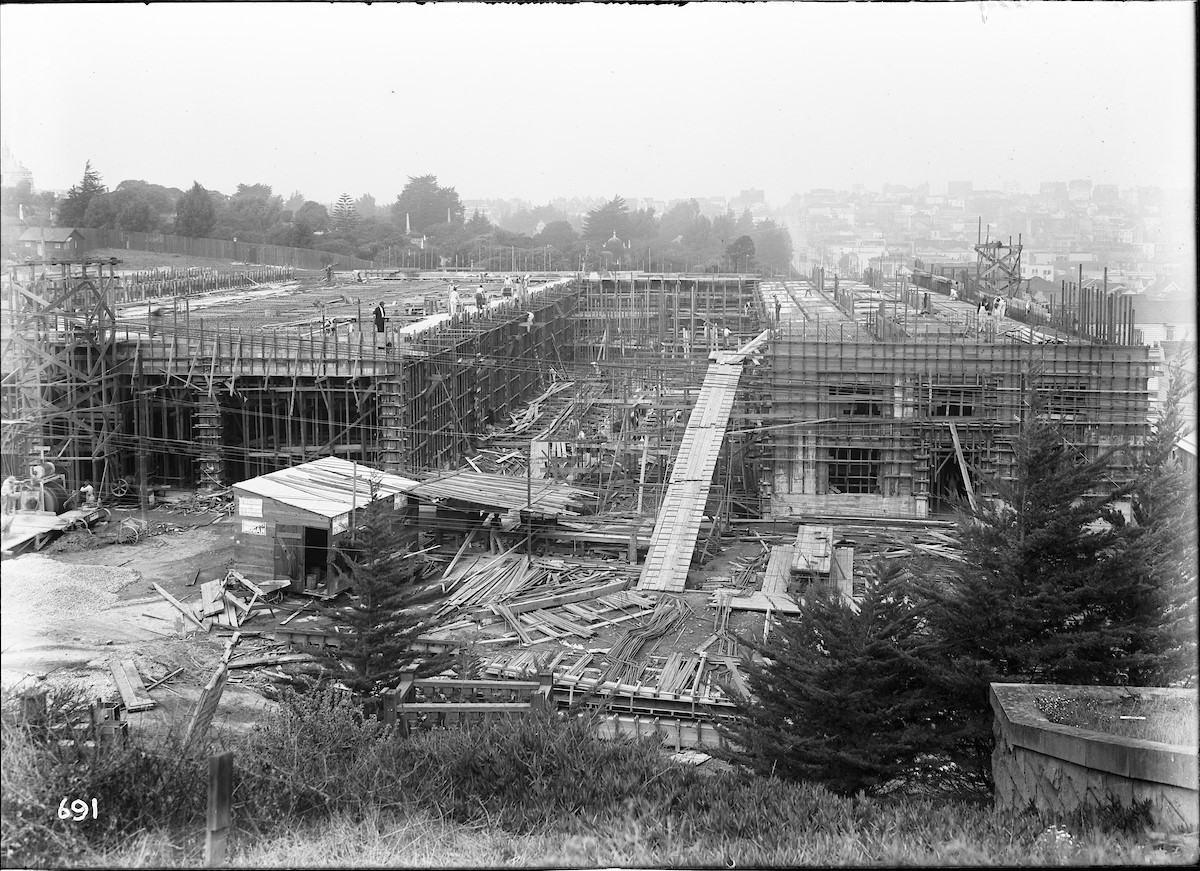
In-progress construction of Muni’s headquarters in October 1912, two months prior to the opening of the city’s publicly owned streetcar line in December. This photo was taken from Calvary Cemetery, the present-day location of a shopping center.
Constructed in 1912 and known then as “Geary Car House”, this building was the operations hub of the San Francisco Municipal Railway, the nation’s first publicly owned transit agency in a major US city. Built on bedrock from reinforced concrete, the original building had a shops and storage garages for streetcar operations, a three-story office tower, and an Art-Deco style relief sculpture above the bronze entrance doors on 949 Presidio Avenue.
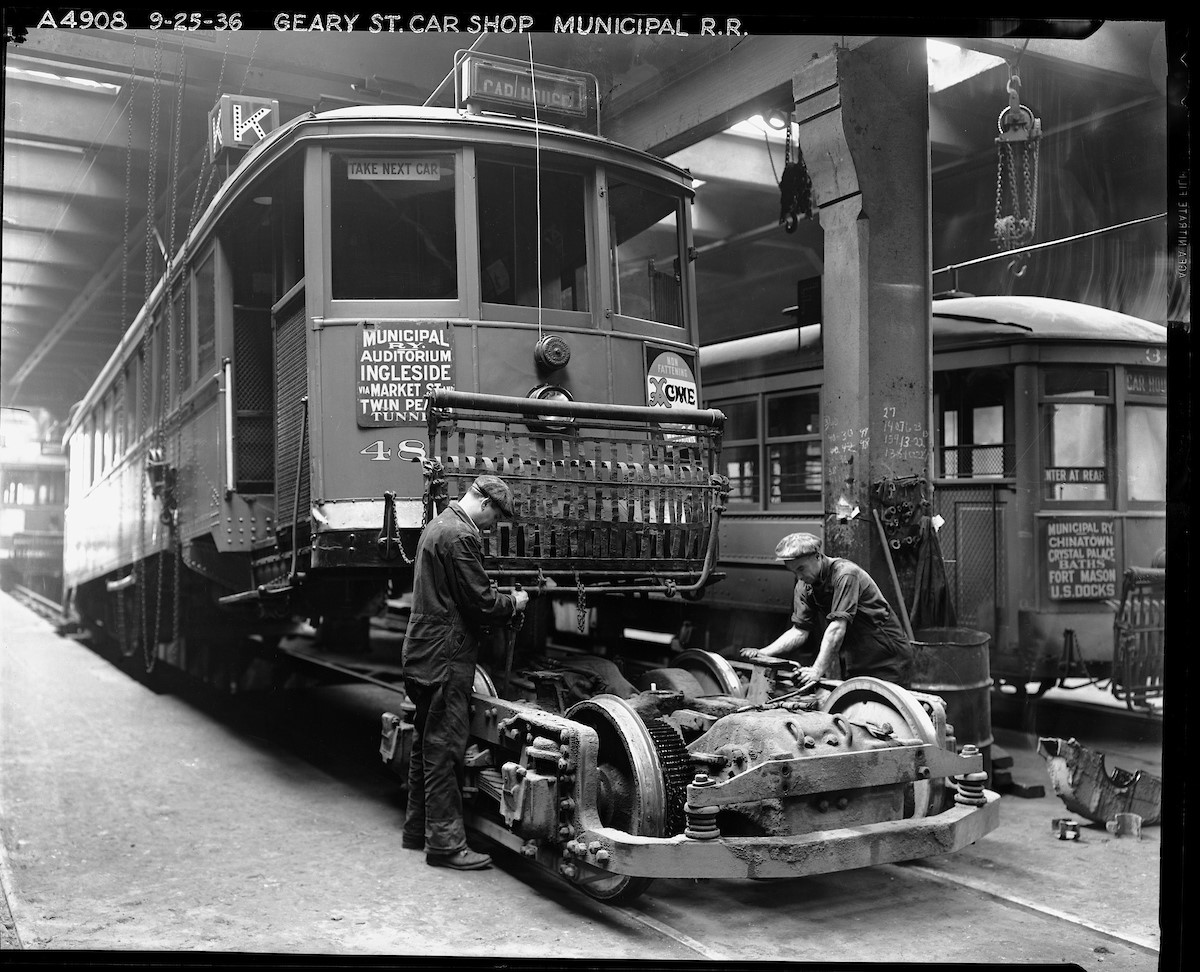
Inside the shops at Geary Car House, two mechanics work on a truck (the combined wheels, suspension, and motor of the streetcar) pulled from a K Line streetcar in this 1936 photo.
In 1915, the rapidly expanding Muni system required more staff and more room, so a second story of offices was added above the streetcar storage and maintenance tracks along Geary. Inside the shops, staff did everything from repairing collision damage to overhauling electric motors and major mechanical parts.
Following World War II, as many rail lines across the city were converted to bus operations, the days of streetcars at Geary came to an end. In the late 1940s, a major project was undertaken to construct a yard and garages on the north end of the building for Muni’s growing fleet of electric trolley buses. After this renovation, the facility became known as Presidio Division.
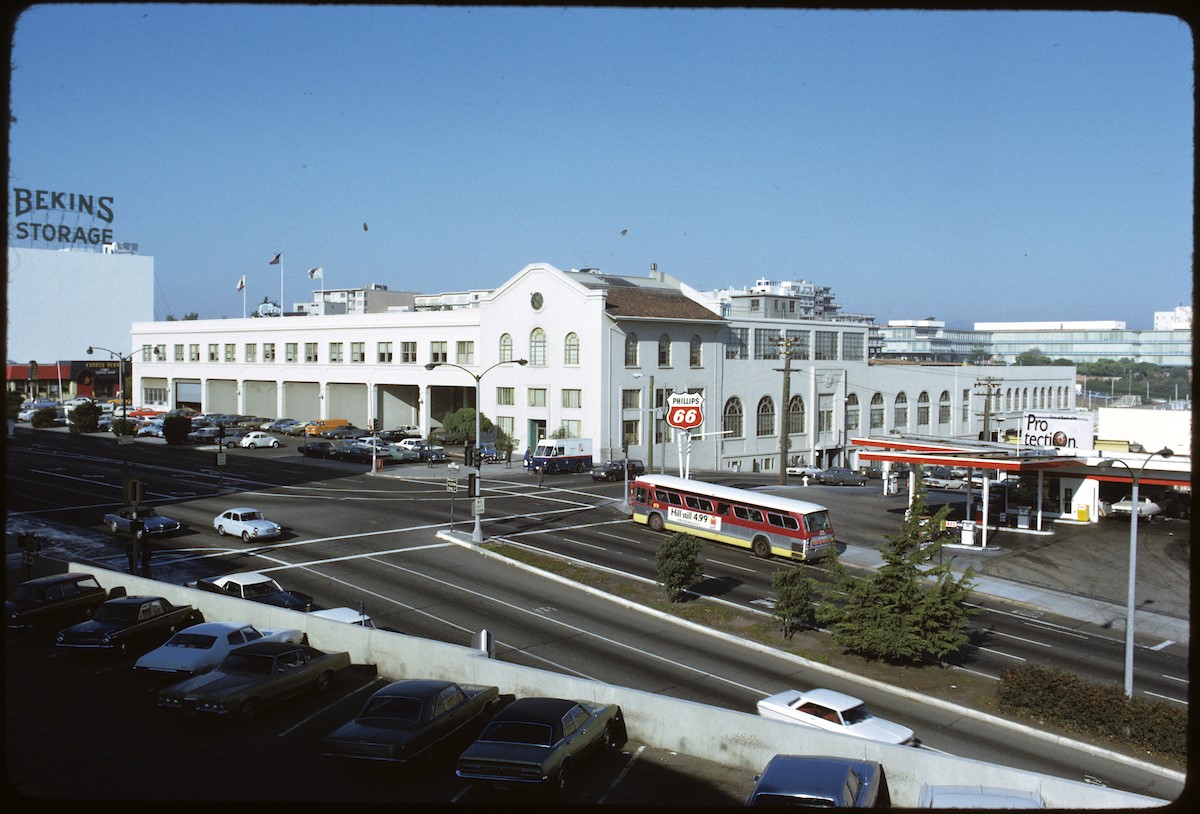
This 1972 view was taken just one year prior to the construction of an underpass for Geary Boulevard that would allow traffic to bypass this area.
In the years following the construction of the bus yard, the building saw various remodels to alter and update interior workspaces to meet the organization’s changing needs. The streetcar maintenance bays along Geary were even used to store the city’s voting machines.
Presidio remained Muni headquarters until the early 2000s, when most offices were moved to the Civic Center area to co-locate many of the functions of the fledgling SFMTA (formed by voter mandate in 1999). Following the move, Presidio has continued to serve as an operations and maintenance division for most of our 40-foot trolley buses as well as the primary offices for operator training and the Peer Assistance program.
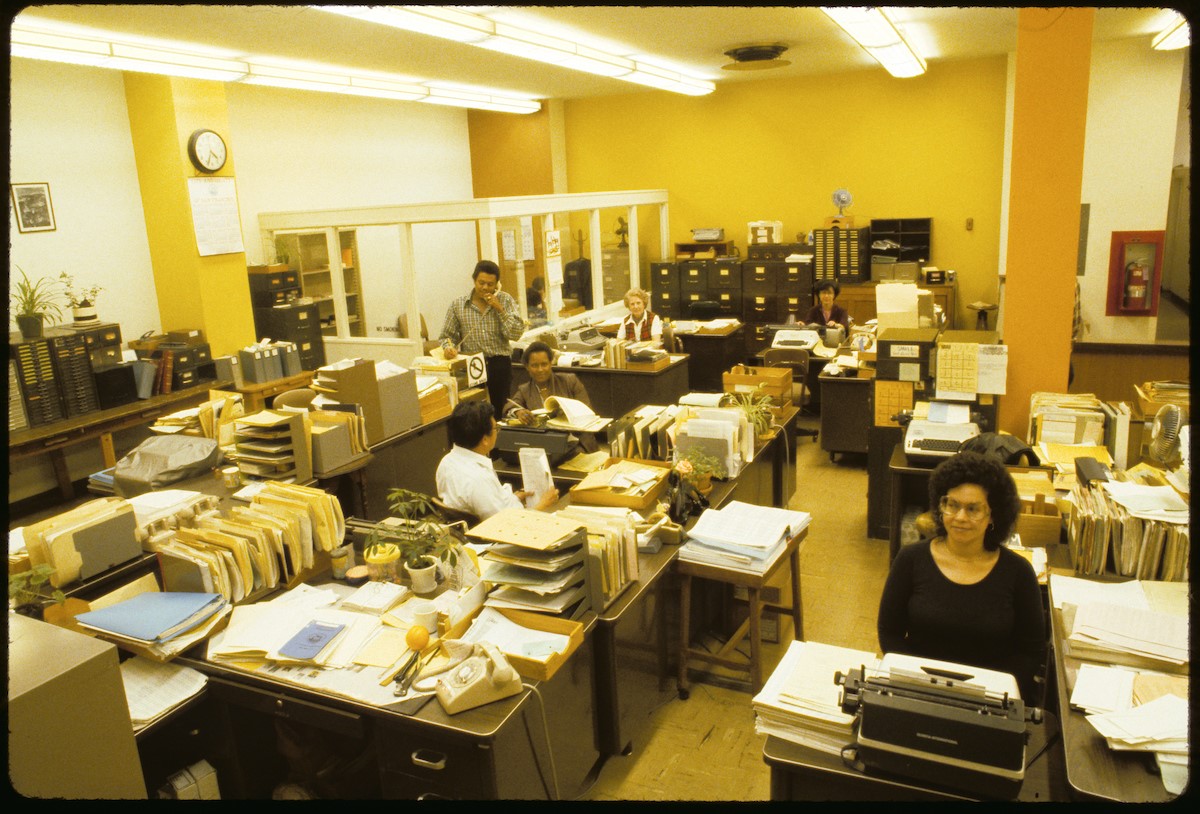
Typewriters, paperwork, and file cabinets abound in this view inside one of the offices at Presidio Division in the late 1970s.
Today, the building shows its age from years of use and is outdated compared to modern transit maintenance facilities, slowing down bus repairs. Though repairs and remodels have been done to keep things operational, the Building Progress Program is seeking to completely revamp Presidio to help support reliable Muni service as part of the SFMTA’s long-term facilities plan.
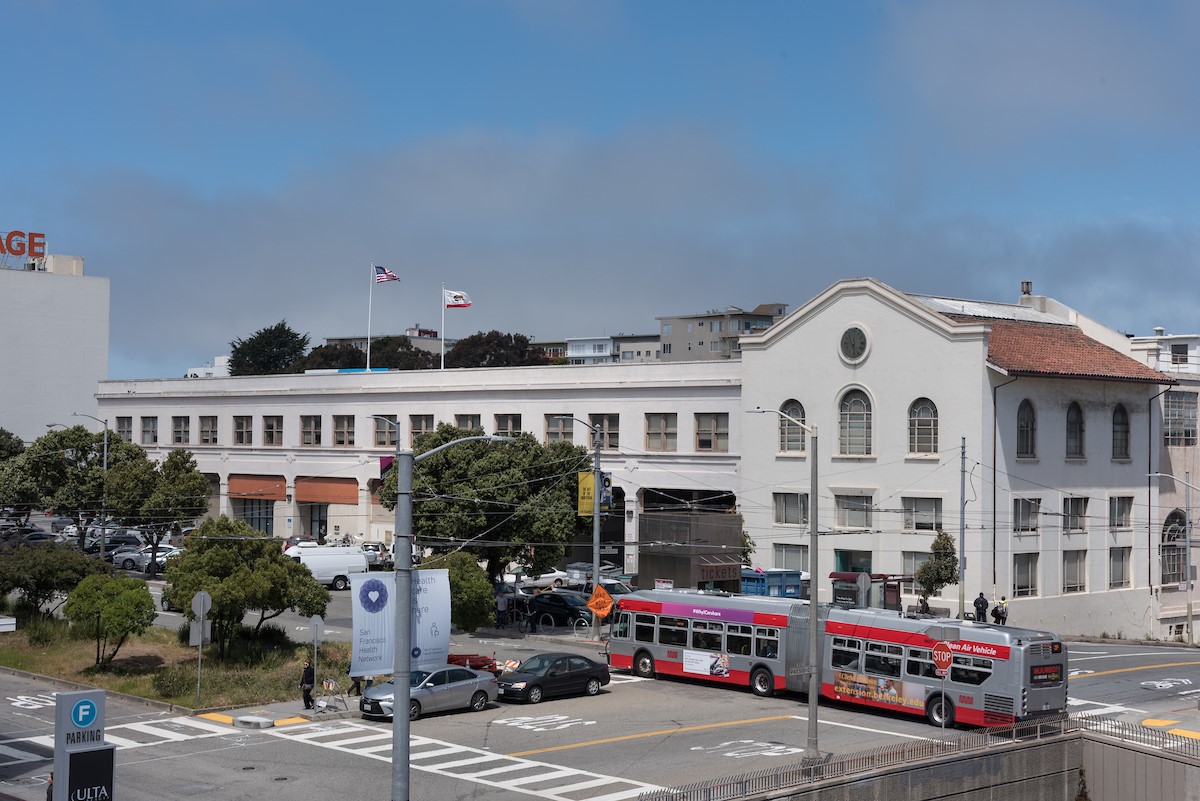
Today, 60-foot buses for the 38 and 38R routes are maintained at Presidio.
Check out more photos of Presidio Division through the years in our Historic Photos collection.
Published June 24, 2021 at 04:03AM
https://ift.tt/3qnTuVr
Comments
Post a Comment
If you have any doubt's, please let me know