An Action Plan for Racial Equity at the SFMTA

An Action Plan for Racial Equity at the SFMTA
By

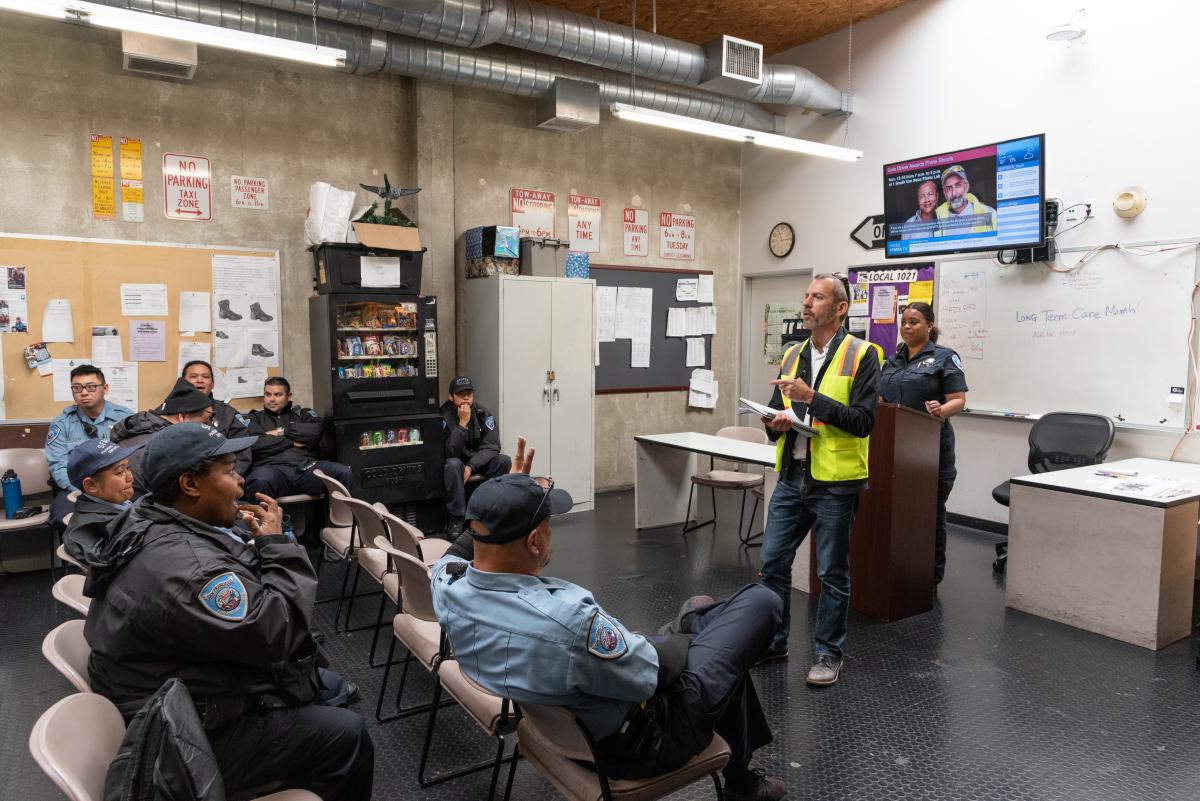
Photo of Director Jeff Tumlin and staff

In a pre-COVID session, Director Jeff Tumlin and SFMTA staff discuss the agency’s priorities

As the manager of San Francisco’s streets and transportation network, the SFMTA has the immense responsibility of ensuring dignified access and freedom of movement for all through its community engagement, planning and service delivery. The agency also has a significant responsibility to its almost 6,000 employees to dismantle any harmful cultures, practices and policies that reinforce anti-Blackness, structural racism and/or bias in the workplace.

The agency developed our Racial Equity Action Plan as a process and strategic plan for SFMTA, guided by the citywide racial equity framework, to enact institutional and structural change to achieve racial equity.

With leadership from the SFMTA’s newly appointed Race, Equity, and Inclusion Officer, Josephine Ayankoya, and Human Resources Director Kimberly Ackerman, the plan commits the SFMTA to ongoing action, reflection and refinement leading to structural change. In particular the plan identifies concrete actions in hiring and recruitment, retention and promotions, discipline and separations, diverse and equitable leadership, mobility and professional development and a culture of inclusion and belonging.

A number of human resources actions are already underway at the SFMTA:

  • Permanent Civil Service: A form has been created for HR analysts to use in the hiring process to better understand ethnicity and gender trends at different stages of the hiring process.
  • Cost control decisions: The agency’s cost control group membership has been expanded to include a more diverse group of staff, ensuring that a broader set of backgrounds and experiences shape important budget decisions.
  • Disciplinary dashboard: Managers will begin using a consistent tracking system across the agency to measure and monitor disciplinary actions.
  • Blanding report updates: The agency will make quarterly updates that respond to findings of the 2019 Blanding Report, which outlined racial equity deficiencies at the agency.

 Next steps

The SFMTA Office of Race, Equity and Inclusion has also initiated an agencywide series of listening sessions. These discussions are be a space for staff across the agency to give input on:

  • Challenges related to racial and social inequities experienced by staff
  • Resources needed to advance racial equity within the workforce
  • Perspectives on what should be prioritized in the SFMTA’s racial equity work

Moving forward, the Office of Race, Equity and Inclusion will hire additional staff based on feedback from over 100 meetings with staff members across the agency.

In its next phase, the Racial Equity Action Plan will also extend its efforts to include external equity issues including the services rendered by the SFMTA, the projects we plan, the ways we engage the public and how we support staff who work directly with the public. This will be done in accordance with guidance from the Office of Racial Equity under San Francisco’s Human Rights Commission.
Image of cover of SFMTA Racial Equity Action Plan report cover: Phase 1 - Internal Programs & Policies


Published May 21, 2021 at 06:16PM
https://ift.tt/3bJkdFT

Comments

Popular posts from this blog

Slow Streets Program to Help With Social Distancing

Slow Streets Program to Help With Social Distancing By With Muni service temporarily reduced during the COVID-19 health crisis, many San Francisco residents need to walk and take other modes of transportation to make essential trips. However, sometimes it is difficult to maintain 6’ of social distance on many sidewalks, park paths, and bikeways. This can be especially true when passing lines outside grocery stores and other essential services. Because of this, many pedestrians are choosing to walk in the street, exposing themselves to swiftly moving vehicle traffic. The SFMTA is implementing a new program, Slow Streets, to close some streets to through traffic and allow roadways to be used more as a shared space for foot and bicycle traffic. Throughout the city, corridors have been identified for Phase 1 Slow Streets. Beginning this week, some of these streets will be closed to through vehicle traffic to prioritize walking/biking and to provide more space for social distancing duri...

Weight Loss Success Stories: 6 People Share How They Shed Pounds with a High-Protein Diet

Weight Loss Success Stories: 6 People Share How They Shed Pounds with a High-Protein Diet Sarah:  Sarah, a 32-year-old mother of two, struggled with her weight after having her second child. She decided to try a high-protein diet and was able to lose 30 pounds in just three months. She replaced her breakfast with a protein shake, ate a salad with grilled chicken for lunch, and had fish or chicken with vegetables for dinner. Mike:  Mike, a 45-year-old man, had been overweight his entire life. He tried various diets, but none of them worked for him. He decided to give a high-protein diet a try and was able to lose 50 pounds in six months. He ate eggs, chicken, fish, and lean meats for most of his meals and limited his intake of carbohydrates and sugary foods. Emily:  Emily, a 28-year-old woman, had been struggling with her weight since her teenage years. She tried many diets and weight loss programs, but nothing seemed to work for her. She decided to try a high-p...

By The Numbers: The SFMTA’s COVID-19 Response

By The Numbers: The SFMTA’s COVID-19 Response By Erica Kato The COVID-19 pandemic has brought about unforeseen c hanges to San Francisco’s transportation network. And the impact of the crisis will continue to be felt city-wide long beyond the end of the public health emergency. On March 13, 2020, when it became clear that San Francisco needed immediate adjustments to the transportation system, Director of Transportation Jeff Tumlin launched SFMTA’s Department Operations Center (DOC) team. Since then, the DOC has served as a centralized hub to ensure that we are minimizing health risks to employees and the public as we keep transportation running, both by coordinating internally within the agency and by collaborating closely with our city, state, and federal partners to deploy resources and information in the most effective way possible. San Francisco's response to the COVID-19 pandemic included implementing temporary emergency transit lanes  Our COVID-19 response has chal...