By Erin McMillan
Shortly after the pandemic’s onset, the SFMTA implemented Temporary Emergency Transit Lanes to make sure essential trips on Muni wouldn’t get caught in traffic. On Mission Street from 11th to 3rd streets in SoMa, the transit lanes have proven effective at protecting Muni travel times while traffic has increased. Now, with the city’s reopening generating even more traffic, keeping these lanes on the road permanently is as important as ever.
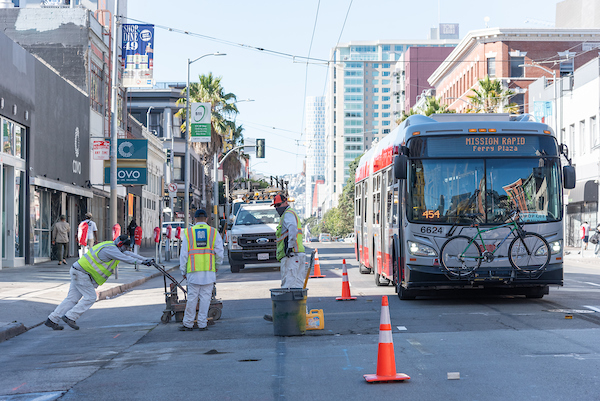
Paint Shop Crew Removing Old Pavement Markings for Installation of Temporary Emergency Transit Only Lanes on Mission Street on September 23, 2020
What’s Next?
Given that the data shows the lanes are effective, the SFMTA is now pursing making the full-time transit lanes, and their benefits, permanent. Following up on our initial evaluation of the project, we are now inviting the community to learn about next steps for making the lanes permanent. We are hosting a two-week virtual open house where you can check out this information via an on-demand recorded presentation or by reviewing a PDF of the presentation at your own pace. Still have questions? Join us for virtual office hours Thursday, April 29 from 4 to 6 p.m.
Travel on Mission Street South of Market
The SoMa segment of Mission Street from 11th to 3rd streets was the first corridor to get temporary emergency transit lanes. The project converted part-time, rush hour-only lanes into full-time lanes to help protect Muni customers from traffic congestion and a possible increased risk of exposure to COVID-19 on slower, more crowded buses. This better served the needs of the 14 Mission and 14R Mission Rapid that are busy all day, not just in the traditional peak commute hours. The corridor also serves regional transit from SamTrans and Golden Gate Transit, making these lanes important to regional as well as local travel.
Transit Lane Benefits
So far, the lanes on Mission Street have achieved their goal– keep transit moving even as traffic threatens to slow it down. Traffic has risen 20% since the summer of 2020, yet transit times are staying relatively consistent --meaning the transit lanes are effective in protecting buses from traffic. In addition to the transit data showing how effective the transit lanes are, 65% of community survey respondents said they wanted to keep the transit lanes permanently.
The project also helped simplify the street and traffic flow by widening the lanes that were previously too narrow to safely allow for buses. In addition, on some blocks parking shifted from one side of the street to the other, depending on the time of day. This new configuration is now easier and safer for all road users to navigate. Loading for businesses has also changed as part of the project, with the hours of when yellow zones are available increasing by over 40%.
For more information, visit the Mission Street SoMa Transit Improvements webpage, email us at TellMuni@SFMTA.com, or call (415) 646-2350.
Published April 29, 2021 at 03:20AM
https://ift.tt/3aPmhvP
Comments
Post a Comment
If you have any doubt's, please let me know