
Better Connections from Bayview and Hunters Point to Downtown

Better Connections from Bayview and Hunters Point to Downtown
By Enrique Aguilar

To better connect southeast San Franciscans with downtown, the SFMTA debuted the 15 Bayview Hunters-Point Express in late January, coinciding with the return of T Third train service. Within weeks, average daily boardings reached 1,000 customers on this new service.
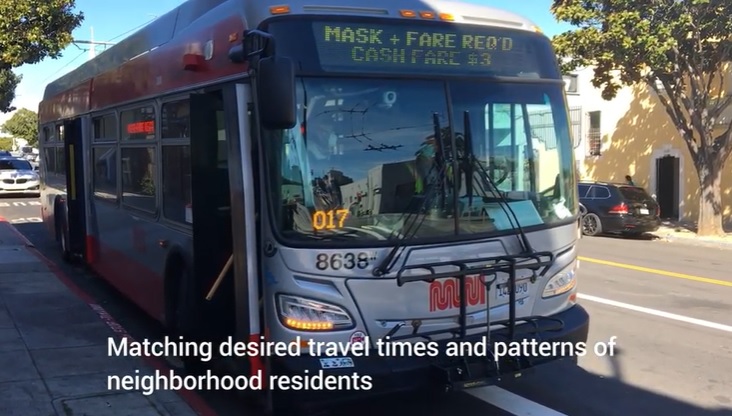
Photo of 15 Bayview Hunters Point Express bus

The 15 Bayview Hunters Point Express 

We added this route based on community feedback from the Southeast Muni Expansion Project in 2018, which prioritized a more direct trip to downtown from the Bayview. With the sudden rise of the COVID-19 pandemic and its disproportionate impacts on communities in the Bayview and Hunters Point, fast-tracking the project became critical to our transit planning. Adding service capacity and a direct connection between these neighborhoods and downtown is a crucial step in supporting the City’s economic recovery and increasing job access for essential workers using transit.

Using data from the SFMTA Equity Toolkit, staff determined that the addition of the 15 Bayview Hunters Point Express in the January 23 service changes resulted in the largest increase in job access for 45- and 60-minute commutes of any San Francisco neighborhood.

The SFMTA convened the Bayview Hunters-Point Express Working Group, comprised of community leaders who helped shaped the conversation on route options. Then, at a time when pandemic precautions precluded in-person community outreach, we invited all area residents to vote for their preferred route through both an online and text-based survey.

After months of planning and continuous support from the Bayview Hunters-Point Express Working Group, we were able to implement a route that offers service closer to residents’ homes and make trips shorter for community members.

“We appreciate the community process and approach SFMTA took to reinstate the 15 Bayview Hunters Point Express,” said Lyslynn Lacoste, Executive Director at Bayview Hunters Point Mobilization for Adolescent Growth in our Communities (BMAGIC) and working group member. “Particularly identifying and prioritizing those that are most isolated in the Bayview community and ensuring that they have efficient access to the public transportation line extending to downtown. I look forward to personally utilizing [it] myself as I travel from the downtown area to my office in the Bayview.”

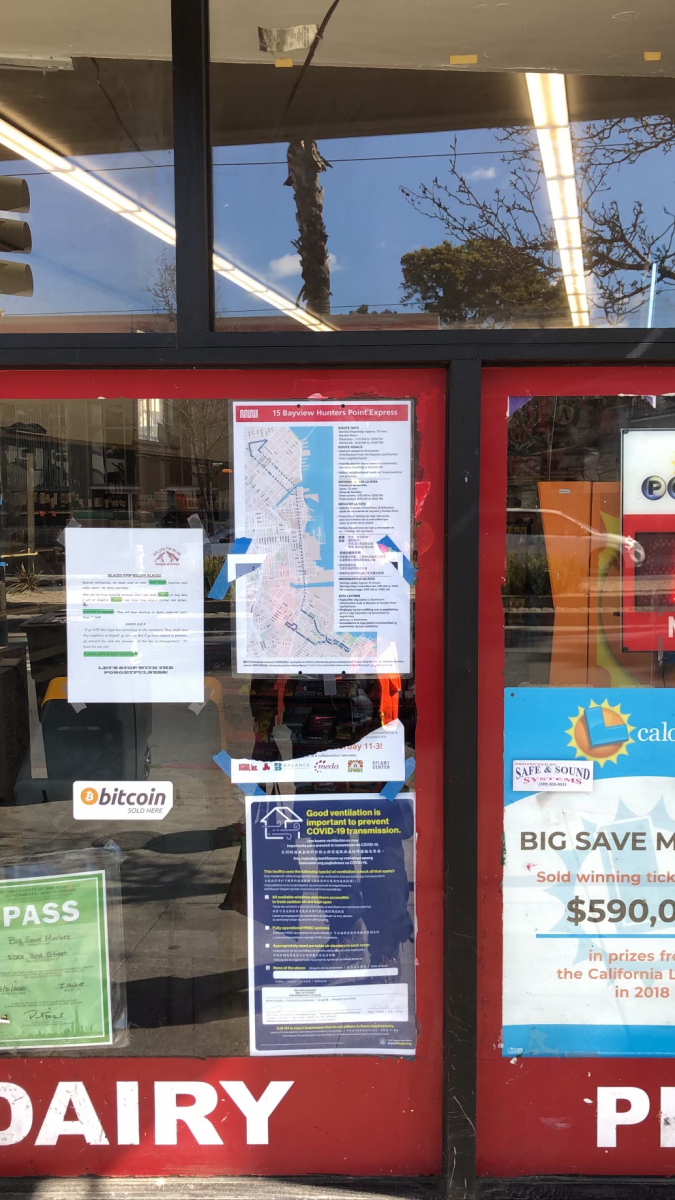
While in-person outreach remains limited due to COVID-19 physical distancing guidelines, SFMTA staff continue to engage community residents and leaders in order to evaluate the service and gather feedback. Discussions with the working group on the initial impact of the service began earlier this week. In mid-March, project staff also distributed handouts to customers of the 15 Bayview Hunters Point Express waiting at bus stops and onboard when riding between downtown and the Bayview. Posters were also placed in businesses along Third Street in the Bayview.
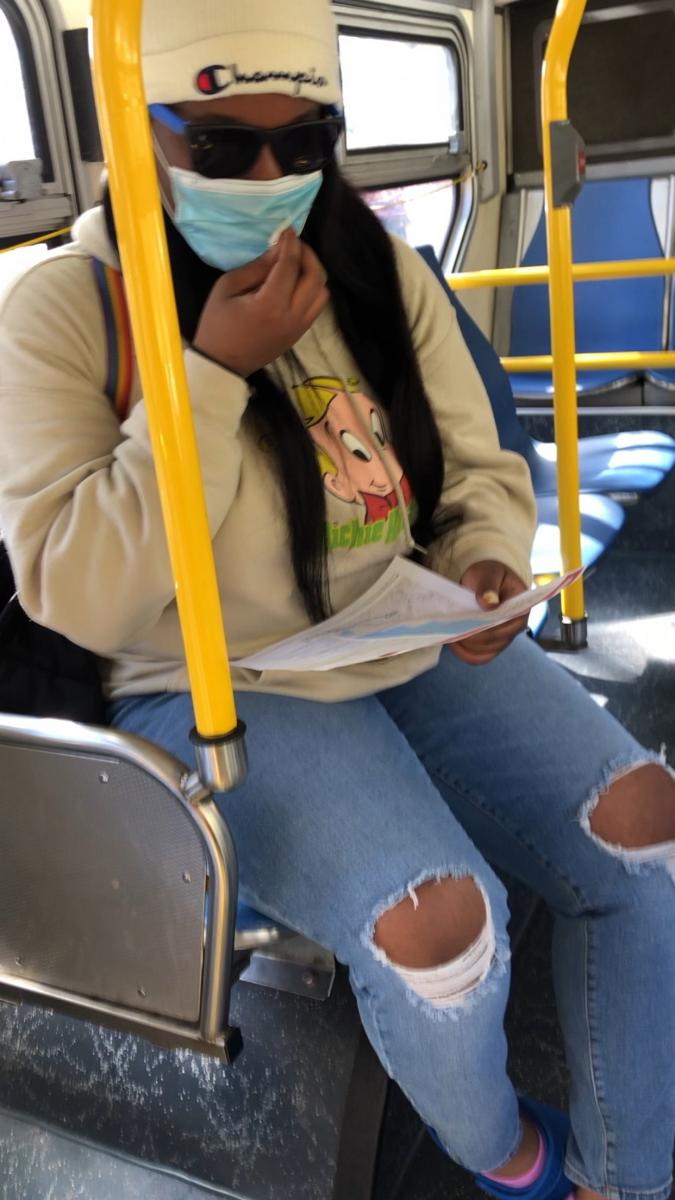
Muni customer reading handout provided by SFMTA staff
Muni customer reading handout provided by SFMTA staff

15 Bayview Hunters Point Express signs were posted at businesses along Third Street

15 Bayview Hunters Point Express signs were posted at businesses along Third Street

Community members are encouraged to provide comments on the 15 Bayview Hunters-Point Express by completing the online Muni feedback form.


Published March 26, 2021 at 08:57PM
https://ift.tt/3svsJig

Comments

Popular posts from this blog

Slow Streets Program to Help With Social Distancing

Slow Streets Program to Help With Social Distancing By With Muni service temporarily reduced during the COVID-19 health crisis, many San Francisco residents need to walk and take other modes of transportation to make essential trips. However, sometimes it is difficult to maintain 6’ of social distance on many sidewalks, park paths, and bikeways. This can be especially true when passing lines outside grocery stores and other essential services. Because of this, many pedestrians are choosing to walk in the street, exposing themselves to swiftly moving vehicle traffic. The SFMTA is implementing a new program, Slow Streets, to close some streets to through traffic and allow roadways to be used more as a shared space for foot and bicycle traffic. Throughout the city, corridors have been identified for Phase 1 Slow Streets. Beginning this week, some of these streets will be closed to through vehicle traffic to prioritize walking/biking and to provide more space for social distancing duri...

Weight Loss Success Stories: 6 People Share How They Shed Pounds with a High-Protein Diet

Weight Loss Success Stories: 6 People Share How They Shed Pounds with a High-Protein Diet Sarah:  Sarah, a 32-year-old mother of two, struggled with her weight after having her second child. She decided to try a high-protein diet and was able to lose 30 pounds in just three months. She replaced her breakfast with a protein shake, ate a salad with grilled chicken for lunch, and had fish or chicken with vegetables for dinner. Mike:  Mike, a 45-year-old man, had been overweight his entire life. He tried various diets, but none of them worked for him. He decided to give a high-protein diet a try and was able to lose 50 pounds in six months. He ate eggs, chicken, fish, and lean meats for most of his meals and limited his intake of carbohydrates and sugary foods. Emily:  Emily, a 28-year-old woman, had been struggling with her weight since her teenage years. She tried many diets and weight loss programs, but nothing seemed to work for her. She decided to try a high-p...

By The Numbers: The SFMTA’s COVID-19 Response

By The Numbers: The SFMTA’s COVID-19 Response By Erica Kato The COVID-19 pandemic has brought about unforeseen c hanges to San Francisco’s transportation network. And the impact of the crisis will continue to be felt city-wide long beyond the end of the public health emergency. On March 13, 2020, when it became clear that San Francisco needed immediate adjustments to the transportation system, Director of Transportation Jeff Tumlin launched SFMTA’s Department Operations Center (DOC) team. Since then, the DOC has served as a centralized hub to ensure that we are minimizing health risks to employees and the public as we keep transportation running, both by coordinating internally within the agency and by collaborating closely with our city, state, and federal partners to deploy resources and information in the most effective way possible. San Francisco's response to the COVID-19 pandemic included implementing temporary emergency transit lanes  Our COVID-19 response has chal...