
Gene Henderson: Honoring Muni’s First Black Division Manager

Gene Henderson: Honoring Muni’s First Black Division Manager
By Jeremy Menzies

In recognition of Black History Month, we bring you the story of Gene Henderson, the first Black man to become the head of a Muni bus division, Muni’s Kirkland Division.

Henderson’s Background

Gene Henderson was born in Houston, Texas, in 1916. He married his wife Naomi in 1939 and then served in the U.S. Army during World War II. Following the war, Gene and his family moved to San Francisco where he began his career at the San Francisco Municipal Railway.

Early Career

On February 1, 1946, Henderson was hired as a streetcar motorman out of Sutro Division, which was located on the corner of 32nd Ave. and Clement St. He was hired just five years after Muni’s first Black transit operator, Audley Cole, had successfully fought to integrate the carmen’s union in 1941. In his early days at Muni, Gene worked one of the three lines running out of Sutro Division from the Ferry Building to the Richmond District on Sutter Street.
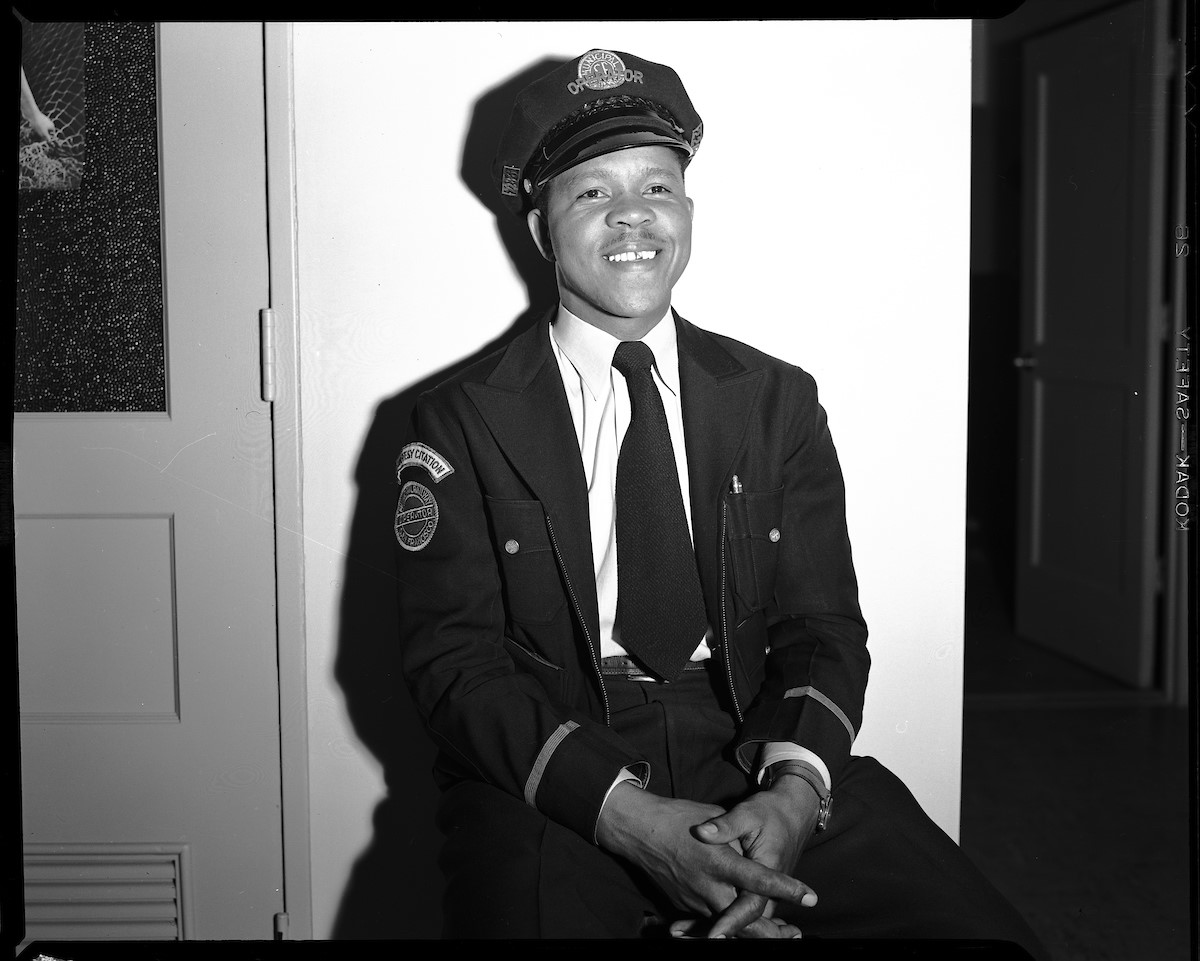
Gene Henderson in 1951

Gene Henderson, photographed in March 1951 for the Muni "Man of the Month" award.


Five years into his career at Muni, Henderson moved to Kirkland Division as a bus driver and was nominated by passenger commendations for the Muni "Man of the Month" award, a recognition given to operators demonstrating excellence in their work.

Moving Through the Ranks

Gene Henderson’s career was marked by a series of new assignments and promotional advancements within the organization. Moving from motorman to bus driver, line trainer, inspector, dispatcher and claims investigator before becoming superintendent, Henderson gained the skills and knowledge he needed to run a busy operating division first-hand.  He was appointed head of Kirkland Division in 1973.  In the June-July 1973 issue of Muni’s Trolley Topics newsletter, it was reported that on his first day in the position, he treated Kirkland operators to doughnuts and coffee along with a bit of advice from his years of experience.
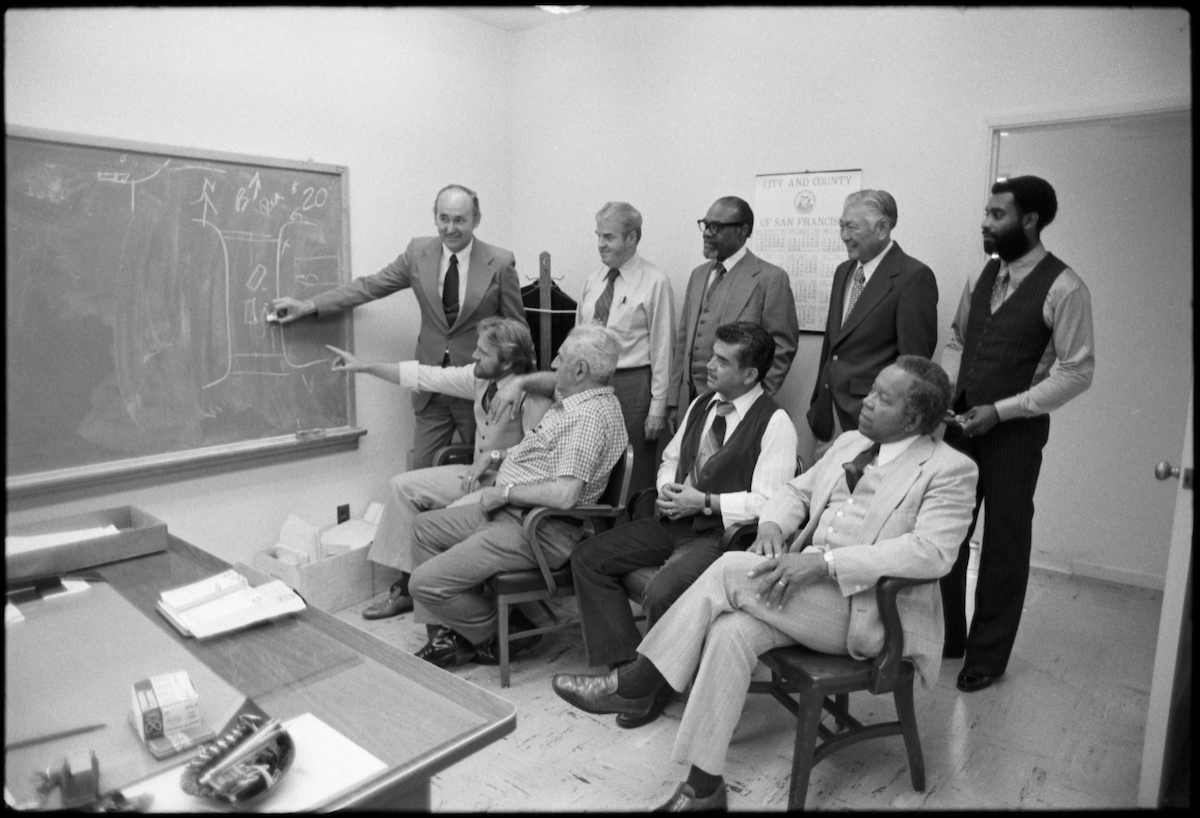
Gene Henderson (seated, fourth from the left) is pictured here with Muni's Claims Department staff in 1979, just one year before his retirement.

Gene Henderson (seated, fourth from the left) is pictured here with Muni's Claims Department staff in 1979, just one year before his retirement.

Late Career and Retirement

After three years as head of Kirkland, Henderson was on the move again, transferring to Assistant Claims Agent in 1976. Shortly thereafter, he became Safety and Training Supervisor in 1977, overseeing operator training and safety programs. In 1980, Henderson retired from Muni after over 34 years of service.  In the Trolley Topics newsletter article from the time, Henderson noted, "I've given it my best shot."  An understatement for a man who began as a streetcar operator and ended up as an important contributor to Muni's operations management.  Henderson passed away in 1999 at the age of 83.

For more stories of Muni’s unsung heroes and others who helped break down barriers in San Francisco transit, check out this article from Muni preservation partner, Market Street Railway and our past blog on the topic.


Published February 24, 2021 at 10:07PM
https://ift.tt/3spubCg

Comments

Popular posts from this blog

Slow Streets Program to Help With Social Distancing

Slow Streets Program to Help With Social Distancing By With Muni service temporarily reduced during the COVID-19 health crisis, many San Francisco residents need to walk and take other modes of transportation to make essential trips. However, sometimes it is difficult to maintain 6’ of social distance on many sidewalks, park paths, and bikeways. This can be especially true when passing lines outside grocery stores and other essential services. Because of this, many pedestrians are choosing to walk in the street, exposing themselves to swiftly moving vehicle traffic. The SFMTA is implementing a new program, Slow Streets, to close some streets to through traffic and allow roadways to be used more as a shared space for foot and bicycle traffic. Throughout the city, corridors have been identified for Phase 1 Slow Streets. Beginning this week, some of these streets will be closed to through vehicle traffic to prioritize walking/biking and to provide more space for social distancing duri...

Weight Loss Success Stories: 6 People Share How They Shed Pounds with a High-Protein Diet

Weight Loss Success Stories: 6 People Share How They Shed Pounds with a High-Protein Diet Sarah:  Sarah, a 32-year-old mother of two, struggled with her weight after having her second child. She decided to try a high-protein diet and was able to lose 30 pounds in just three months. She replaced her breakfast with a protein shake, ate a salad with grilled chicken for lunch, and had fish or chicken with vegetables for dinner. Mike:  Mike, a 45-year-old man, had been overweight his entire life. He tried various diets, but none of them worked for him. He decided to give a high-protein diet a try and was able to lose 50 pounds in six months. He ate eggs, chicken, fish, and lean meats for most of his meals and limited his intake of carbohydrates and sugary foods. Emily:  Emily, a 28-year-old woman, had been struggling with her weight since her teenage years. She tried many diets and weight loss programs, but nothing seemed to work for her. She decided to try a high-p...

By The Numbers: The SFMTA’s COVID-19 Response

By The Numbers: The SFMTA’s COVID-19 Response By Erica Kato The COVID-19 pandemic has brought about unforeseen c hanges to San Francisco’s transportation network. And the impact of the crisis will continue to be felt city-wide long beyond the end of the public health emergency. On March 13, 2020, when it became clear that San Francisco needed immediate adjustments to the transportation system, Director of Transportation Jeff Tumlin launched SFMTA’s Department Operations Center (DOC) team. Since then, the DOC has served as a centralized hub to ensure that we are minimizing health risks to employees and the public as we keep transportation running, both by coordinating internally within the agency and by collaborating closely with our city, state, and federal partners to deploy resources and information in the most effective way possible. San Francisco's response to the COVID-19 pandemic included implementing temporary emergency transit lanes  Our COVID-19 response has chal...