
Reducing Crowding and Providing Service to Open Spaces

Reducing Crowding and Providing Service to Open Spaces
By Enrique Aguilar

The 30 Stockton bus route extension to Crissy Field in the Presidio began service on September 19. In partnership with the Presidio Trust, Muni implemented this new lifeline connection to bring workers, families, residents and visitors from Chinatown, Tenderloin and SoMa neighborhoods to the Golden Gate National Recreation Area via public transportation.
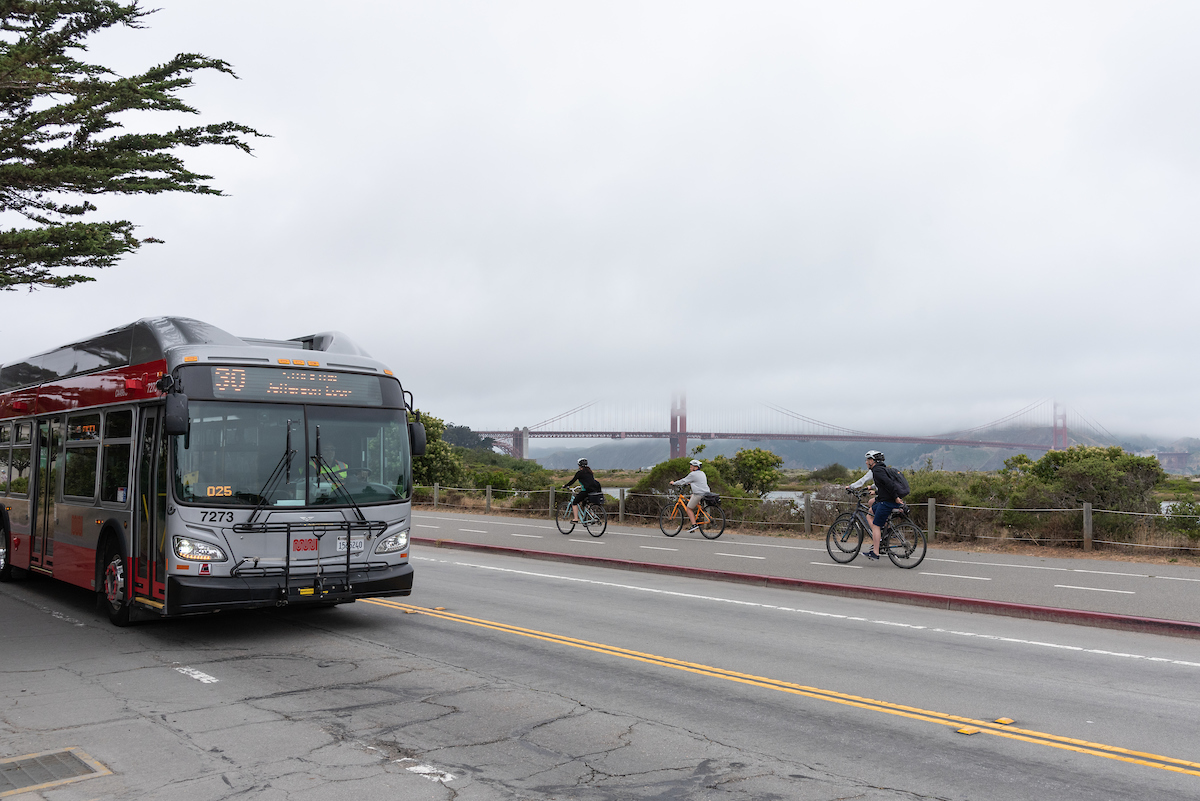
30 Stockton bus in service with Golden Gate Bridge in the background
The 30 Stockton on Marina Boulevard en route to downtown San Francisco

Shifting from 40-foot to 60-foot buses on the 30 Stockton helps reduce crowded conditions through neighborhoods like Chinatown, a neighborhood that generates some of the highest rates of trips in San Francisco. Moving the terminal to its new location in Crissy Field provides increased space for these longer buses.

Direct access to parks via public transportation is vital for neighborhoods with the least access to open space in San Francisco. Visitors to the Presidio enjoy nature within the city, including miles of walking and biking trails, beaches, scenic overlooks with views of the Golden Gate Bridge, the bay and the city, as well as picnic and play areas. The 30 Stockton extension not only benefits park-goers, but serves as a lifeline for essential workers who work or live in the Presidio or nearby neighborhoods.
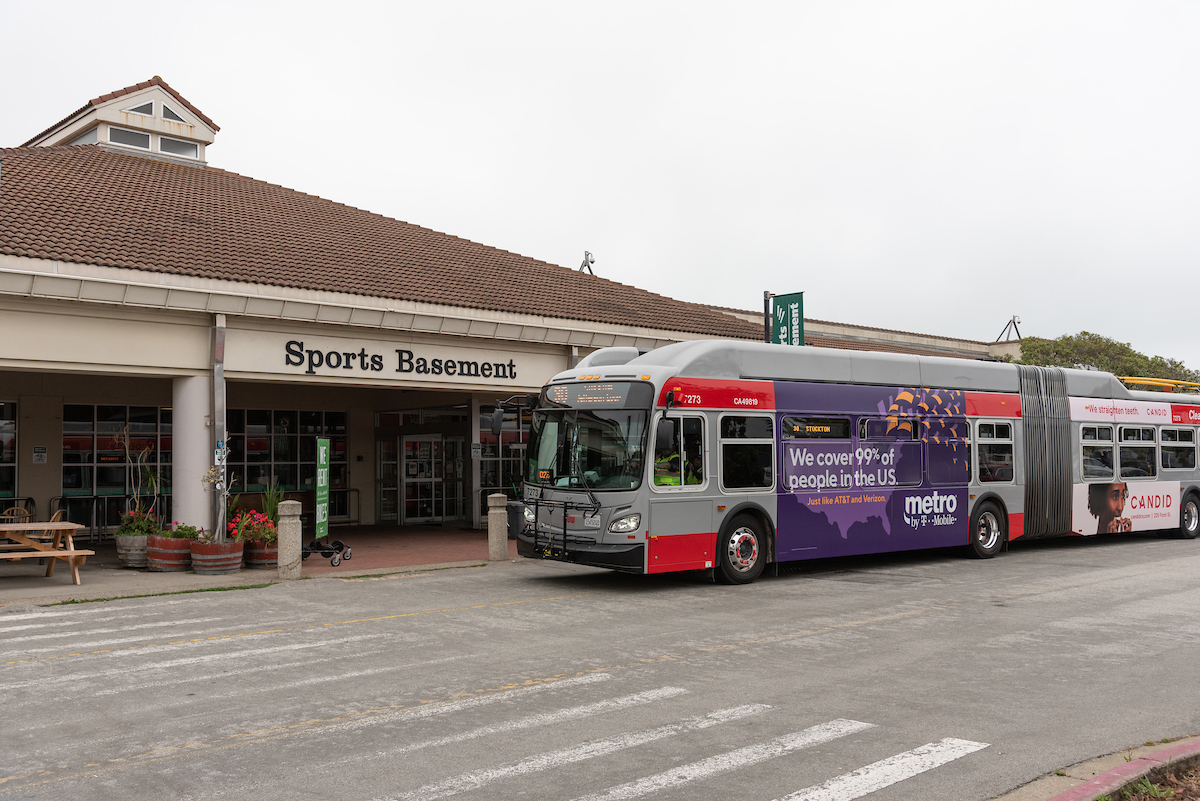
30 Stockton bus stopping Sports Basement
The 30 Stockton making its new last stop near the Sports Basement store

Details on the 30 Stockton extension:

  • The 30 Stockton route extends into the Presidio between 6:00 a.m. and 8:00 p.m. daily. All other times, the 30 Stockton terminal is on Divisadero at Chestnut.
  • We have added three stops in each direction within the Presidio:
    • On Mason Street near Marina Boulevard by Crissy Field East Beach.
    • On Mason at Halleck Street near the Tunnel Tops park and Presidio Main Post.
    • By the Sports Basement store at Crissy Field.
  • Daily frequency: Every 12 minutes on weekdays, every 20 minutes on weekends.


Published October 14, 2020 at 04:33AM
https://ift.tt/3dp0Xx0

Comments

Popular posts from this blog

Slow Streets Program to Help With Social Distancing

Slow Streets Program to Help With Social Distancing By With Muni service temporarily reduced during the COVID-19 health crisis, many San Francisco residents need to walk and take other modes of transportation to make essential trips. However, sometimes it is difficult to maintain 6’ of social distance on many sidewalks, park paths, and bikeways. This can be especially true when passing lines outside grocery stores and other essential services. Because of this, many pedestrians are choosing to walk in the street, exposing themselves to swiftly moving vehicle traffic. The SFMTA is implementing a new program, Slow Streets, to close some streets to through traffic and allow roadways to be used more as a shared space for foot and bicycle traffic. Throughout the city, corridors have been identified for Phase 1 Slow Streets. Beginning this week, some of these streets will be closed to through vehicle traffic to prioritize walking/biking and to provide more space for social distancing duri...

Weight Loss Success Stories: 6 People Share How They Shed Pounds with a High-Protein Diet

Weight Loss Success Stories: 6 People Share How They Shed Pounds with a High-Protein Diet Sarah:  Sarah, a 32-year-old mother of two, struggled with her weight after having her second child. She decided to try a high-protein diet and was able to lose 30 pounds in just three months. She replaced her breakfast with a protein shake, ate a salad with grilled chicken for lunch, and had fish or chicken with vegetables for dinner. Mike:  Mike, a 45-year-old man, had been overweight his entire life. He tried various diets, but none of them worked for him. He decided to give a high-protein diet a try and was able to lose 50 pounds in six months. He ate eggs, chicken, fish, and lean meats for most of his meals and limited his intake of carbohydrates and sugary foods. Emily:  Emily, a 28-year-old woman, had been struggling with her weight since her teenage years. She tried many diets and weight loss programs, but nothing seemed to work for her. She decided to try a high-p...

By The Numbers: The SFMTA’s COVID-19 Response

By The Numbers: The SFMTA’s COVID-19 Response By Erica Kato The COVID-19 pandemic has brought about unforeseen c hanges to San Francisco’s transportation network. And the impact of the crisis will continue to be felt city-wide long beyond the end of the public health emergency. On March 13, 2020, when it became clear that San Francisco needed immediate adjustments to the transportation system, Director of Transportation Jeff Tumlin launched SFMTA’s Department Operations Center (DOC) team. Since then, the DOC has served as a centralized hub to ensure that we are minimizing health risks to employees and the public as we keep transportation running, both by coordinating internally within the agency and by collaborating closely with our city, state, and federal partners to deploy resources and information in the most effective way possible. San Francisco's response to the COVID-19 pandemic included implementing temporary emergency transit lanes  Our COVID-19 response has chal...