
The First Step to Battery Electric Muni Buses

The First Step to Battery Electric Muni Buses
By Bradley Dunn

Starting in early October, the SFMTA will take a big leap forward in implementing its Sustainability and Climate Action Program by installing nine new charging stations at Muni Woods Division to power the agency’s first battery electric buses after significant progress in battery technology in recent years. The project will kick off the pilot program to determine the SFMTA’s future charging methods for new zero-emission e-buses.
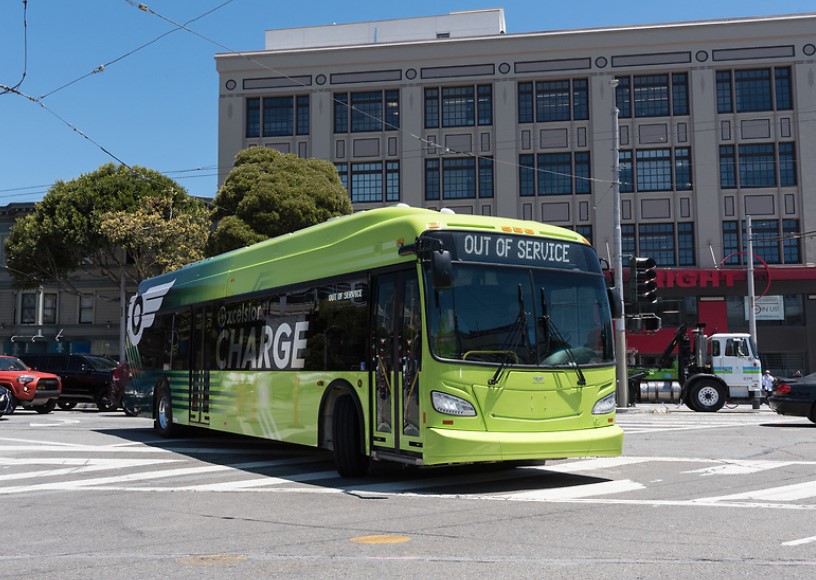
A battery electric bus turns from Mission on to South Van Ness

A battery-electric bus turns from Mission on to South Van Ness

To find out if battery electric bus technology is ready for San Francisco, the SFMTA is implementing an 18-month battery-electric bus pilot program. The SFMTA will procure three 40-foot buses each from three different manufacturers to test their performance in revenue service for 18 months. The first three battery electric buses are expected to arrive in spring 2021 as part of the pilot program.

Questions remain about whether battery electric buses can handle San Francisco’s heavy transit ridership and hilly routes. Before deploying battery-electric buses, they must deliver the same reliability and service as our current hybrid-electric and electric trolley bus fleets.

As of 2018, 45 percent of San Francisco’s greenhouse gas emissions are generated by the transportation sector which is heavily reliant on carbon-intensive fossil fuels. This reliance on harmful fossil fuels is changing the earth’s climate and contributes to extreme weather events, increased fire risk and sea level rise. The SFMTA is a leader in providing safe and sustainable transportation options as it continues to implement its Sustainability and Climate Action Program.

The SFMTA’s energy-efficient Muni fleet contributes less than two percent of the transportation sector’s emissions and moves approximately 700,000 people every day. Today, the SFMTA operates the greenest transit system of any major city in North America.
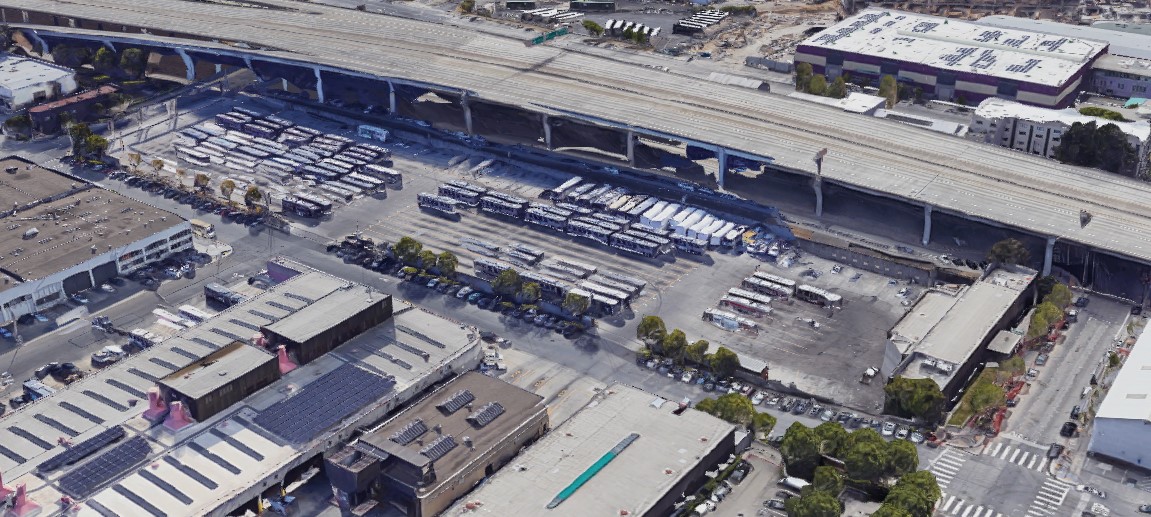
The Woods Bus Yard where the new charging infrastructure will be installed.

The Woods Bus Yard where the new charging infrastructure will be installed.

Electric Bus Pilot Program

The installation of the new chargers will take approximately nine months to complete. In addition to the battery-electric bus chargers, the updated infrastructure includes electrical support equipment, such as switchgear, switchboard, transformers, power cabinets and conduit.

  • Construction hours are Monday through Friday, 9 a.m. to 5 p.m.
  • Bus operation at Woods will operate as usual without interruption.
  • Work will be contained in the bus yard and will not impact traffic or transit service to the public.
  • Measures will be taken to control noise and dust during work hours. 

Installing these chargers is the first step in making the greenest transit fleet in North America even more environmentally sustainable. Battery electric buses will further reduce harmful emissions and air pollution.

For more information on electric mobility, please visit SFMTA Electric Mobility Page


Published September 29, 2020 at 11:14PM
https://ift.tt/3kX90DV

Comments

Popular posts from this blog

Celebrating the life and legacy of Harvey Milk

Celebrating the life and legacy of Harvey Milk By Sophia Scherr Today we celebrate and remember the life of San Francisco LGBTQ+ advocate and icon, Harvey Milk. One of our city’s most revered politicians, Milk's legacy as the first openly gay San Francisco supervisor and elected official in California helped in breaking down discriminatory barriers and usher LGBTQ+ politicians in government positions. Milk also advocated for equitable transportation, as he rode Muni exclusively since he did not own a car. He was a firm believer that affordable mobility was important in creating a thriving and livable city. Below is Harvey Milk with Curtis E. Green, General Manager of the Municipal Railway promoting Muni’s “Fast Pass”. Mr. Green was a barrier-breaking figure in his own right, by becoming the first African American appointed to Muni's top position from his beginnings with the Agency as a bus operator. With his 1974 appointment, Green also became the first African American to ...

By The Numbers: The SFMTA’s COVID-19 Response

By The Numbers: The SFMTA’s COVID-19 Response By Erica Kato The COVID-19 pandemic has brought about unforeseen c hanges to San Francisco’s transportation network. And the impact of the crisis will continue to be felt city-wide long beyond the end of the public health emergency. On March 13, 2020, when it became clear that San Francisco needed immediate adjustments to the transportation system, Director of Transportation Jeff Tumlin launched SFMTA’s Department Operations Center (DOC) team. Since then, the DOC has served as a centralized hub to ensure that we are minimizing health risks to employees and the public as we keep transportation running, both by coordinating internally within the agency and by collaborating closely with our city, state, and federal partners to deploy resources and information in the most effective way possible. San Francisco's response to the COVID-19 pandemic included implementing temporary emergency transit lanes  Our COVID-19 response has chal...

Slow Streets Program to Help With Social Distancing

Slow Streets Program to Help With Social Distancing By With Muni service temporarily reduced during the COVID-19 health crisis, many San Francisco residents need to walk and take other modes of transportation to make essential trips. However, sometimes it is difficult to maintain 6’ of social distance on many sidewalks, park paths, and bikeways. This can be especially true when passing lines outside grocery stores and other essential services. Because of this, many pedestrians are choosing to walk in the street, exposing themselves to swiftly moving vehicle traffic. The SFMTA is implementing a new program, Slow Streets, to close some streets to through traffic and allow roadways to be used more as a shared space for foot and bicycle traffic. Throughout the city, corridors have been identified for Phase 1 Slow Streets. Beginning this week, some of these streets will be closed to through vehicle traffic to prioritize walking/biking and to provide more space for social distancing duri...