
Scooters to Fill Transportation Gaps in More Neighborhoods

Scooters to Fill Transportation Gaps in More Neighborhoods
By Bradley Dunn

Recent SFMTA authorization enables scooter companies to deploy more scooters and expand into new neighborhoods across San Francisco. Scooters can help by offering an efficient travel choice that is environmentally friendly and fills transportation gaps, especially for shorter trips. With reduced Muni service and returning traffic congestion, the city is focused on promoting sustainable efficient modes of transportation, such as scooters, that do not contribute to congestion or pollution. 

More Scooters and Areas Served

To make the scooters more available, the SFMTA recently updated the process and criteria for scooter permittees to request a fleet increase.  To be eligible for expansion, they must meet key service, compliance and equity goals like a low-income access program. The companies must also serve new neighborhoods and show an increase in users and/or trips using the Adaptive Scooter Pilot, an effort to make shared micromobility more accessible to people with disabilities.

Prior to the COVID-19 pandemic, the SFMTA implemented a Powered Scooter Share Program to address the significant issues demonstrated during the pre-regulation period of shared scooters in San Francisco. SFMTA’s program permitted four companies to provide shared scooters. The fleets were phased to increase over time.

Once San Francisco's transportation needs changed during the COVID-19 pandemic, the SFMTA's Transportation Recovery Plan sought to meet those needs with expanded options like scooters as the economy reopens.
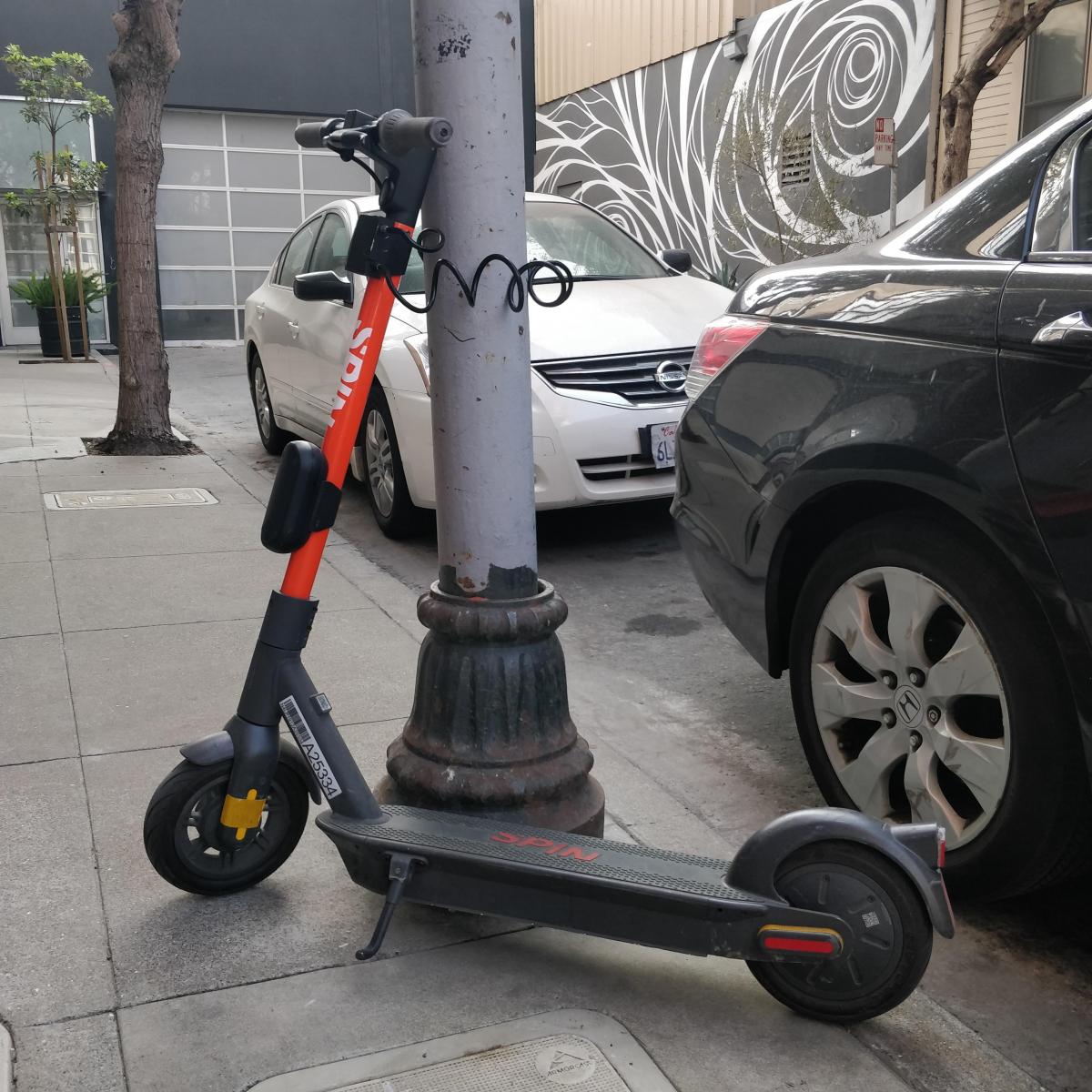
A Spin scooter parked with a lock-to device.

A Spin scooter parked with a lock-to device.

Companies Expanding

Spin will be the first company to expand its fleet and is authorized to add 500 devices scooters to its fleet as of September 3. With this increase, Spin’s fleet will grow to a total of 1,500 scooters and operate in three more neighborhoods as required by the program: Inner/Central Richmond, Inner/Central Sunset and Haight.

Lime recently acquired JUMP, and because both companies hold a permit, we are undertaking a process to review the acquisition and approve the permit transfer. Once the permit transfer is final, Lime would be allowed to operate 2,000  scooters. As part of the requirements for that expanded fleet, the SFMTA will require that the Richmond District and Sunset District also be served.

Increased Enforcement and Transparency

With fleet expansion, the SFMTA has increased our enforcement and monitoring of scooter share to address compliance issues. The SFMTA will increase enforcement sweeps and respond to areas where there have been complaints. Robust enforcement of SFMTA’s oversight functions are critical for public safety. For transparency in this effort, we’ve published a Scooter Share enforcement dashboard.


Published September 15, 2020 at 06:08AM
https://ift.tt/2RtsQKs

Comments

Popular posts from this blog

Celebrating the life and legacy of Harvey Milk

Celebrating the life and legacy of Harvey Milk By Sophia Scherr Today we celebrate and remember the life of San Francisco LGBTQ+ advocate and icon, Harvey Milk. One of our city’s most revered politicians, Milk's legacy as the first openly gay San Francisco supervisor and elected official in California helped in breaking down discriminatory barriers and usher LGBTQ+ politicians in government positions. Milk also advocated for equitable transportation, as he rode Muni exclusively since he did not own a car. He was a firm believer that affordable mobility was important in creating a thriving and livable city. Below is Harvey Milk with Curtis E. Green, General Manager of the Municipal Railway promoting Muni’s “Fast Pass”. Mr. Green was a barrier-breaking figure in his own right, by becoming the first African American appointed to Muni's top position from his beginnings with the Agency as a bus operator. With his 1974 appointment, Green also became the first African American to ...

By The Numbers: The SFMTA’s COVID-19 Response

By The Numbers: The SFMTA’s COVID-19 Response By Erica Kato The COVID-19 pandemic has brought about unforeseen c hanges to San Francisco’s transportation network. And the impact of the crisis will continue to be felt city-wide long beyond the end of the public health emergency. On March 13, 2020, when it became clear that San Francisco needed immediate adjustments to the transportation system, Director of Transportation Jeff Tumlin launched SFMTA’s Department Operations Center (DOC) team. Since then, the DOC has served as a centralized hub to ensure that we are minimizing health risks to employees and the public as we keep transportation running, both by coordinating internally within the agency and by collaborating closely with our city, state, and federal partners to deploy resources and information in the most effective way possible. San Francisco's response to the COVID-19 pandemic included implementing temporary emergency transit lanes  Our COVID-19 response has chal...

Everyday Heroes: Taxi Driver Corey Lamb

Everyday Heroes: Taxi Driver Corey Lamb By Sarah Hellman Corey Lamb shown without his face mask for the purposes of this photo only. Corey Lamb is a veteran taxi driver with over 10 years of experience, and one of our unsung heroes. Corey provides at least 50 trips each month to wheelchair users who are unable to use Muni's accessible but regular fixed-route service. And during the shelter in place order, he has been actively transporting patients to needed medical appointments — patients like San Francisco resident Amelia Sison. Lamb is representative of the many taxi drivers who are working hard during this health emergency to serve the needs of our most vulnerable residents who need to take trips for essential services. For Sison, Lamb is her lifeline to the community. Since her necessary medical treatments began last year, Lamb has been her regular taxi driver, transporting her at least three times a week to and from appointments. Awarded the 2019 Sys...