By Erin McMillan
You may have already noticed the fresh paint and new lane configuration on California Street from Arguello Boulevard to Park Presidio. This recently completed ‘road diet’ painted on California Street changed the lane configuration from four lanes to three with a center turn lane to help improve safety along the corridor.
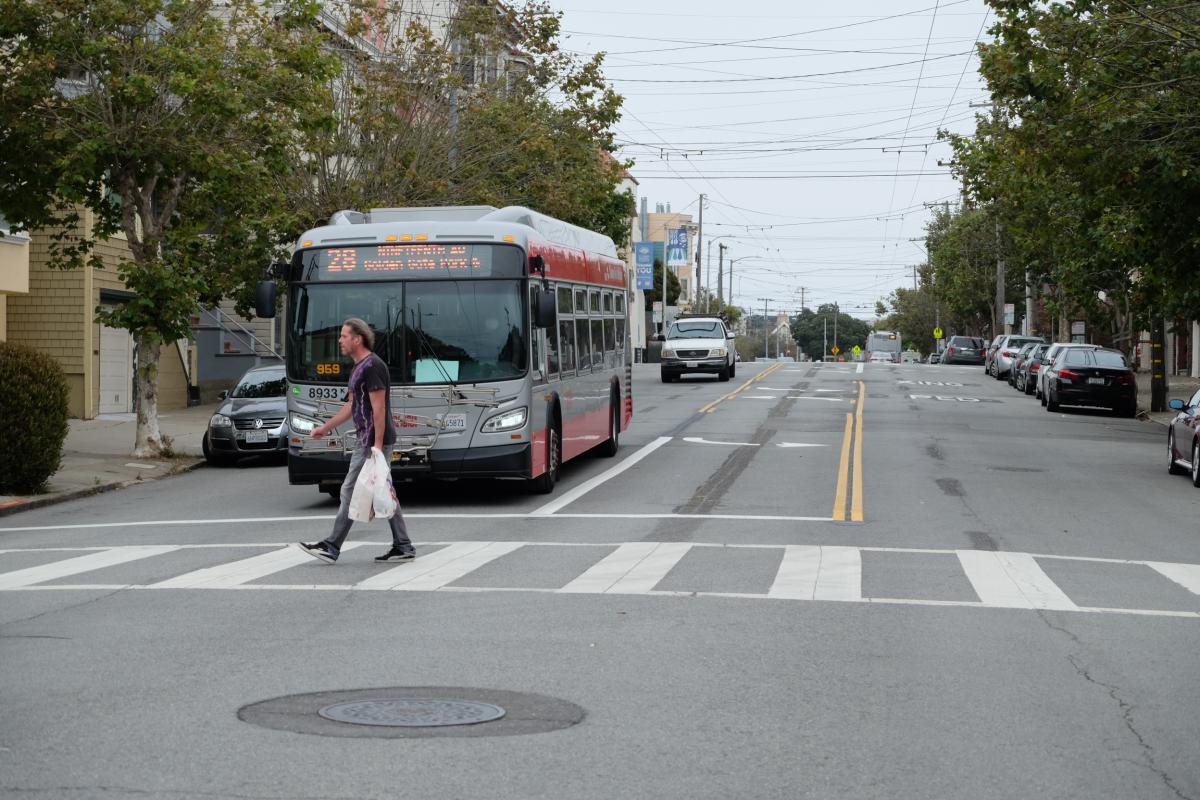
California Street and 10th Avenue post-construction
This was the final safety element to be implemented as part of the California Street Safety Project, which began earlier this year with “daylighting” to increase visibility at intersections.
Why a road diet on California?
California Street is part of the city’s Vision Zero high-injury network -- the 13% of city streets that account for 75% of severe and fatal collisions.
This section of California had 73 injury collisions in five years with 7 involving pedestrians. In addition, there have been 35 Muni-involved collisions, many due to narrow lanes.
- Road diets reduce speeding and risk of collision by reducing the number of lanes
- Wider lanes provide room for safer operation of Muni vehicles
- A separate turn lane allows turning traffic to be separate from traveling traffic
- Fulton Street: Road diet reduced collisions by over 40%
- 25th Avenue: Road diet reduced collisions by 20%
Earlier this year, several safety elements for pedestrians were installed, including:
- Daylighting: Red painted curbs at intersection approaches to improve visibility for all road users
- Higher visibility zebra-striped continental crosswalks
- Updated pavement markings
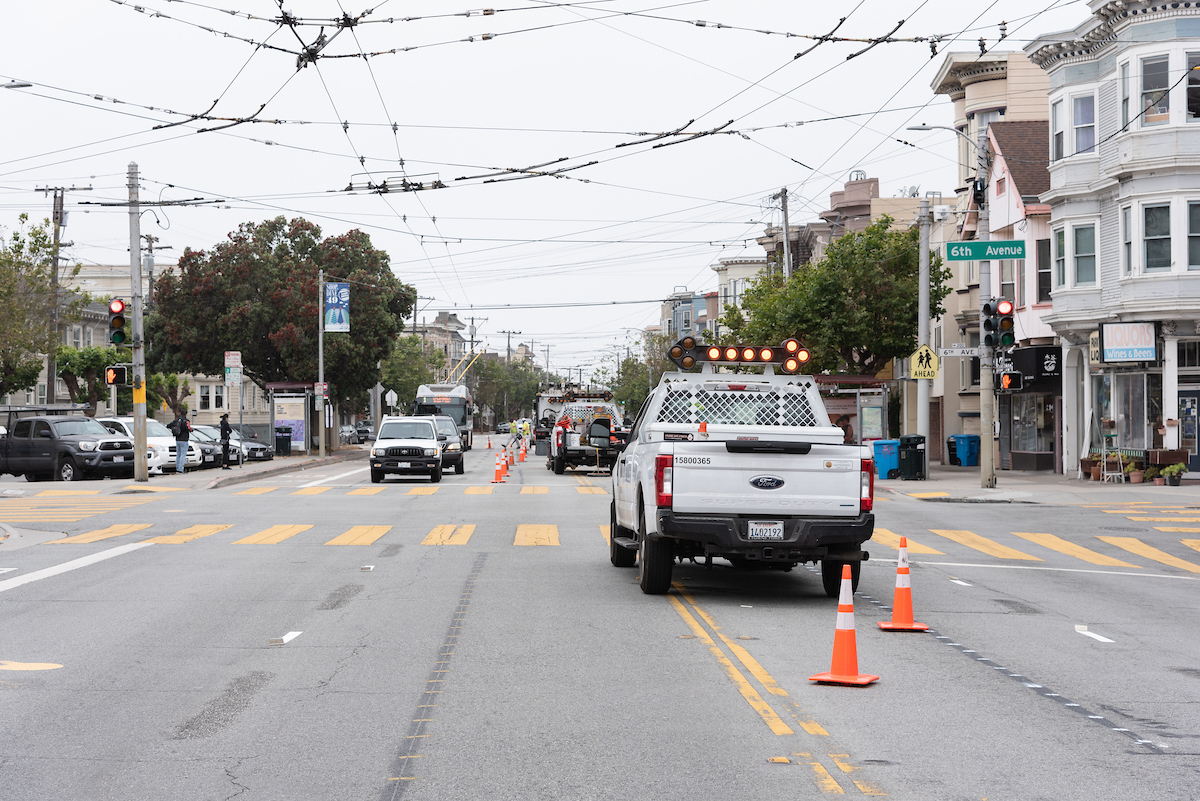
Construction crews working at California Street and Sixth Avenue pre-construction
Starting this fall summer, we’ll begin the evaluation of the project. The evaluation will include traffic and street-level data, such as tracking changes in collisions, traffic volumes on California and side streets, and driving behavior. In addition to traffic and street-level data collection, we’ll be collecting experiential feedback from neighbors via email. Given the impacts of COVID-19, we’ll also be waiting to collect some post-implementation data until the city’s traffic returns to pre-COVID levels.
We also received extensive feedback during project outreach in 2019 and will be using that input to shape our evaluation and monitoring of the project. Thank you to everyone who chimed in on this important project and we that will improve the area for years to come.
To learn more, visit www.SFMTA.com/CaliforniaSafety. Want to give your feedback on any element of the California Street Safety Project? Email us at CaliforniaSafety@SFMTA.com.
Published August 14, 2020 at 12:01AM
https://ift.tt/3g1lcko
Comments
Post a Comment
If you have any doubt's, please let me know